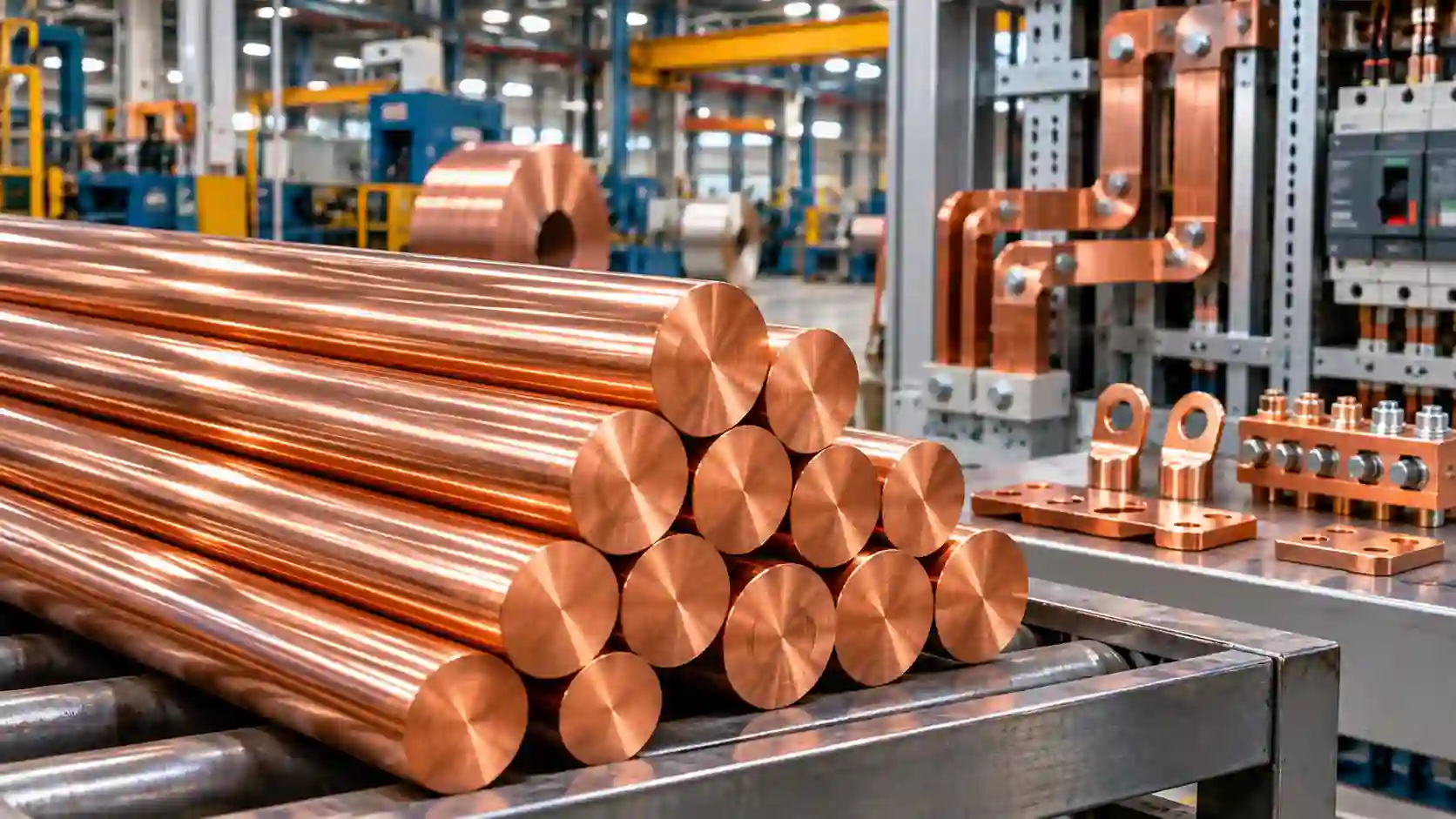
The electrical copper rods are broadly used in different electrical and industrial disciplines due to their good electrical conductivity, great electrical or thermal performance and features that make them suitable for processing. Purchasing copper rods involves selecting the right material specifications, grade purity, dimensions and manufacturing source. If you are an electrical part or equipment manufacturer, OEM or industrial wholesale purchaser, choosing the right electrical copper rods can meet application needs and guarantee consistent performance.
Copper rods for electrical applications are very conductive and have great heat transfer properties. The rods are copper which has very high electrical and thermal conductivity making it the ideal material for electrical connectors, terminals and other conductive parts. It has a high ductility and can be cut, machined, bent and formed into a number of different configurations. These qualities have led to electrical copper rods being the material of choice within electrical manufacturing and the industrial systems that require these rod types.
The choice of the type of copper is dependent on the purity of the material, the presence of oxygen, the conductivity and the conditions of use for manufacturing. Two popular groups of copper used in the manufacture of electrical goods are ETP and oxygen-free copper. Properties of ETP and deoxidized copper can help potential buyers find what they are looking for.
ETP copper (also known as C11000) is often found in the electrical manufacturing industry because of its high electrical conductivity. ETP copper has a controlled level of oxygen, providing conductivity, workability and thermal characteristics. ETP copper rods can be used to make electrical connectors, busbars, terminals and other electrical conductive components. High conductivity Copper Rods are conductors of copper made out of ETP copper.
There are varieties of oxygen-free copper rods such as C10100, C10200. These are produced with very low oxygen and used in applications where a known oxygen level and specific properties are desired. The data provided applies to oxygen free copper and is related to C10100 and C10200. Using these materials for specialised electrical and industrial applications by comparison to ETP copper oxygen free copper has minimum oxygen but it depends on operation condition.
| Material Category | Product Form | Process Control Method | Application Use |
|---|---|---|---|
| Copper Materials | Round rods | Casting and extrusion under control | Power conductors, busbars |
| Copper Materials | Square rods | Dimensional calibration | Electrical terminals |
| Copper Materials | Hex rods | Machining-oriented processing | Fasteners, fittings |
| Copper Materials | Custom profiles | Drawing-based execution | OEM-engineered components |
Prior to buying Industrial copper rods, potential buyers should first consider the conductivity, purity and qualities of the product, quality of the material, as well as the specifications and mechanical properties of the product. These copper rod properties will assist buyers in making an assessment as to whether or not the material satisfies the specified electrical and manufacturing specifications.
Copper rod conductivity can be measured in terms of the international annealed copper standard (IACS). Typically you will see a conductivity percentage quoting. The greater the percentage, the more conductive the material. Buyers for high conductivity copper rods need to ensure the grade and temperature is suitable for their needs and ask for the relevant test certificates.
Copper rod sizes should correspond to the design and fabrication requirements for the component you are producing. Buyers should review the copper rod diameter, length, dimensional tolerances and surface condition. Buyers should also take hardness and ductility into consideration as these properties may impact machining, bending and forming operations. Reviewing the specifications will enable manufacturers to determine if the material supplied meets their component dimensions.
Comparing prices is not the only thing that needs to be considered during copper rod selection as a suitable material. Industrial buyers are advised to assess the following listed factors before ordering copper rods in bulk:
Manufacturers interested in purchasing industrial copper rods need to identify specifications and quantities before making a commitment to buy. Any supplier will have information about what can be ordered, in what packaging, as well as delivery and special requirements.
The following Table talks about the Technical Specifications of copper rods.
| Specification Parameter | Technical Details |
|---|---|
| Product Name | Copper Rods |
| Material | Refined Copper |
| Common Copper Grades | ETP Copper, Oxygen-Free Copper |
| ETP Copper Grade | C11000 |
| Oxygen-Free Copper Grades | C10100, C10200 |
| Copper Purity | Depends on the selected copper grade |
| Electrical Conductivity | Depends on copper grade and material condition |
| Conductivity Measurement | Percentage of IACS |
| Thermal Conductivity | High thermal conductivity |
| Oxygen Content | Varies according to copper grade |
| Material Composition | Primarily copper |
| Manufacturing Process | Continuous casting, extrusion or other suitable forming processes |
| Product Shape | Round Rod |
| Cross-Section | Circular |
| Rod Diameter | As per application requirements |
| Rod Length | As per customer specifications |
| Dimensional Tolerance | As per applicable product standards |
| Surface Finish | Bright, smooth or as specified |
| Material Condition | Annealed, hard or other available tempers |
| Hardness | Depends on grade and temper |
| Tensile Properties | Based on material grade and condition |
| Ductility | Suitable for different forming and fabrication requirements |
| Machinability | Depends on copper grade and temper |
| Fabrication Suitability | Cutting, machining, bending and forming |
| Corrosion Resistance | Good resistance under suitable operating conditions |
| Electrical Applications | Conductive components and electrical assemblies |
| Industrial Applications | Electrical equipment and component manufacturing |
| Component Manufacturing | Connectors, terminals and conductive parts |
| Applicable Standards | ASTM, EN and other relevant material standards |
| Quality Inspection | Chemical composition and dimensional verification |
| Testing Requirements | Electrical, mechanical and material testing as specified |
| Quality Documentation | Material Test Certificates and inspection reports, where available |
| Customisation | Based on required grade, dimensions and application |
| Packaging | As per product dimensions and transportation requirements |
| Bulk Supply | Subject to order quantity and product availability |
| End-Use Industries | Electrical, engineering and industrial manufacturing |
Copper rods for electrical components are used because of their electrical conductivity and ease of processing. Different manufacturing methods are utilized for the production of copper rods for electrical components. Their use varies depending on size, grade and working environment. Here are some of the common usages of copper rods:
Electrical copper rods are chosen by the manufacturer based on their need to carry current, the type of component and manufacturing technique. Selecting the correct specifications helps in ensuring the material will be suitable for their electrical assembly.
When selecting a Copper Products Manufacturers In India, the buyer should look at the available product range and specifications, the availability in terms of bulk supply and the details of the material specifications and the certifications for quality assurance. Contact Ganga R Ispat Metals to get quotations for copper products requirements and discuss specifications for the order quantity. Find copper rod manufacturers at Ganga R Ispat Metals and send requirements to get quotations.
Choosing the right copper rods grade, conductivity and dimension as well as quality of material are also key parameters for selecting appropriate copper conductors. Industrial consumers need to verify product specifications that match their electrical and manufacturing needs prior to ordering in bulk quantities. Reach us at Ganga R Ispat Metals for copper products, and determine their availability, and get a quote.
Here are some of the common copper rods FAQs that buyers need to know before placing an order.
Common ETP copper rod grades include C11000, C10100 and C10200 as these contain the least oxygen.
Increased electrical conductivity aids the effective transmission of current and complies with the performance standards of electrical devices.
ETP copper does not require special cleaning procedures. Certified copper values are also typically fine and work well to a, necessary.
Available diameters are manufacturer dependent. A customer should ask for the diameter, length, tolerances, and custom sizes.
Buyers need to check copper quality, pureness, physical size, standards, testing and certificates, content, delivery and order quantity.
Get in touch with Ganga R Ispat Metals to learn more about the copper items we supply and the industrial applications they are used for.
Connect with our experts to source high-quality brass rods, bronze rods, copper alloys, and precision metal components tailored to your industrial requirements.