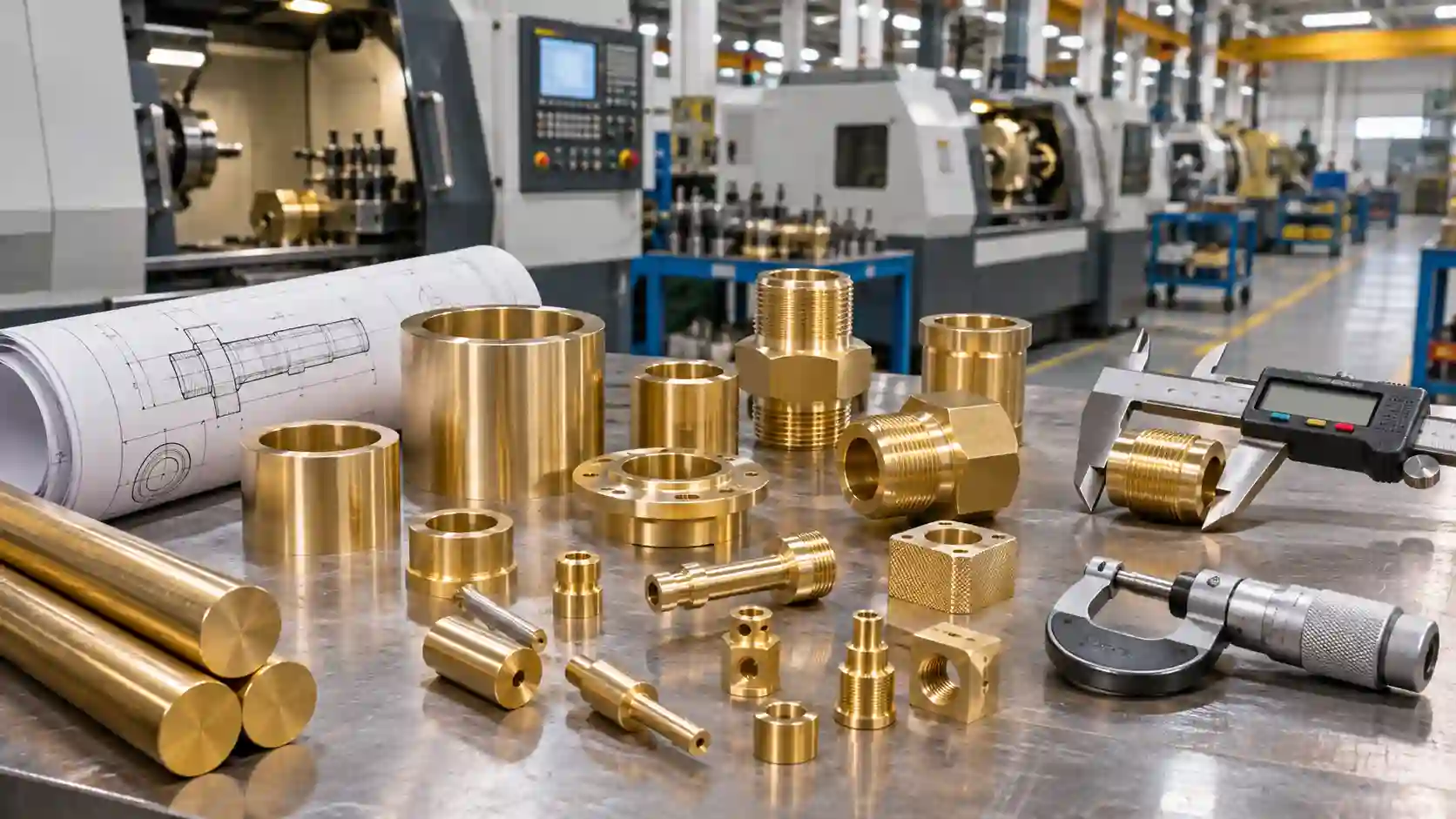
There is always something unique about each plant which is not listed anywhere, like a unique bush dimension, a unique thread or even a unique fitting, compatible with some old machinery. That's where custom made brass products step in. The procedure used by most of the brass products manufacturers in India is very well defined and structured. Here is how Ganga R Ispat Metals do it.
It starts with a request for quotation, called an RFQ. The manufacturer uses it to judge whether the job is workable. For Custom Brass Products, clear details here prevent weeks of back and forth later, and the stated end use helps the supplier suggest a suitable grade for industrial brass products.
A good RFQ usually carries these details:
TRIVIA: “Brass has been used for over 2,000 years. It was made into coins and ornamental objects by Roman artisans well before the advent of machines.”
Once the RFQ arrives, work moves through four stages. Each one confirms the job, prices it, schedules it or keeps changes under control. This is how Brass Products Manufacturers keep a custom job organised from first call to dispatch.
The engineering team opens the drawing first and compares it with what the plant can make. Missing details get a question before anything moves ahead, which matters most for OEM brass products.
Common points checked at this stage:
Here, an evaluation of the capacity of machinery, materials in stock, and part complexity takes place. Thereafter only will the quotation be sent out and the process can begin once there is approval from the customer. This process is common among brass products manufacturers in India supplying Industrial Brass Products.
A quotation usually reflects:
Once the quotation is approved, the order enters the planning phase. Larger orders are divided into lots to ensure continuous flow, and this helps in safeguarding the schedules for brass products manufacturing as well as bulk brass products deliveries.
Planning involves:
Changes will occur. The customer may make changes to drawings or the dimensions after approval, and the manufacturer reviews the feasibility again. Advance approval of all details on custom brass products ensures that all the promises related to costs and time remain unbroken.
Types of changes usually made during an order:
From the initial inquiry to the final shipment, each one is vital in fulfilling the order for a customized brass product. Below is a table that shows consumers how the manufacturers handle the order and what information is required in each process.
| Order Stage | What Happens | Buyer's Role |
|---|---|---|
| RFQ Submission | The manufacturer receives the custom order requirements. | Share drawings, dimensions, quantity, and application details. |
| Technical Review | The design, material, and manufacturing feasibility are checked. | Confirm specifications and clarify missing details. |
| Quotation | Pricing, production time, and delivery terms are discussed. | Review and approve the quotation. |
| Production Planning | Materials, machines, and production schedules are arranged. | Confirm quantity and delivery requirements. |
| Manufacturing | Brass components are produced according to approved specifications. | Stay informed about production progress. |
| Quality Inspection | Finished components are checked against the agreed requirements. | Share any specific inspection or documentation needs. |
| Dispatch | Approved products are packed and prepared for delivery. | Confirm shipping and receiving details. |
However, each order can have a slight difference in the sequence depending on how the design is made, number, and materials used. This information enables one to plan better while buying.
No two orders take the same time. A simple turned part moves faster than a detailed component, so an honest supplier gives a firm date only after seeing the drawing. Buyers placing bulk brass products orders should also allow extra time for each lot.
The main factors are:
Repeat buyers want the tenth batch to match the first. Manufacturers get there by keeping records, which makes OEM brass products easier to reproduce and helps brass products distributors plan stock with confidence. Ganga R Ispat Metals follows this approach with recurring buyers.
Repeat orders run smoother when these are in place:
Accuracy of drawings, approval of the specifications, good production planning, and effective communication are the keys to a smooth execution process for a custom order. People who do that early will find less surprises during the process. In case you have any requirements for your brass products, Contact Ganga R Ispat Metals for quotations.
In order to get custom-made products, the buyer should provide the manufacturers with a technical drawing or sample, dimensions, tolerances, grades of alloys, number, and the delivery date. This will enable the manufacturers to understand the demands of the buyers and produce brass products accordingly.
Manufacturers can manufacture brass items for old machines provided that the required specifications are provided to the manufacturer. This can be done through providing original samples or drawings.
The time required for manufacturing of parts would depend upon the complexity of the part, availability of the material, orders placed, and load of work. The simpler parts would take less time, but detailed parts would need a lot of planning.
Yes, it is possible but there could be some changes in the production cost and delivery times. The manufacturer will have to verify the specifications and will decide on the changed time line before changing the order.
Manufacturers follow certain drawings, samples, and specifications to keep uniformity among repeat orders. Inspections and recording in batches can also help recognize any variation. Such practice will make it convenient for buyers of OEM brass orders to get what they want.
When ordering bulk brass items, buyers should take into account the needed quantity, material type, size, delivery date, and other things. Planning regarding future demand and packaging needs will help the manufacturer to plan production accordingly.
Connect with our experts to source high-quality brass rods, bronze rods, copper alloys, and precision metal components tailored to your industrial requirements.