The CI casting is a manufacturing process that is utilized to cast or mold a product into its final shape. Cast iron is extensively used for engineering and in making durable metal products, such as machinery and infrastructure. It is castable, has a high compressive strength, wear resistance and vibration-damping properties, which allow it to be used in many applications. The performance of a product, however, relies on grade of the product material, manufacturing process and quality control.
Ganga R Ispat Metals produces and distributes cast iron round bars in different grades, diameters, and lengths as per customer specifications. The company provides sand casting and continuous casting service, chemical composition and mechanical property testing service, and a material test certificate (MTC).
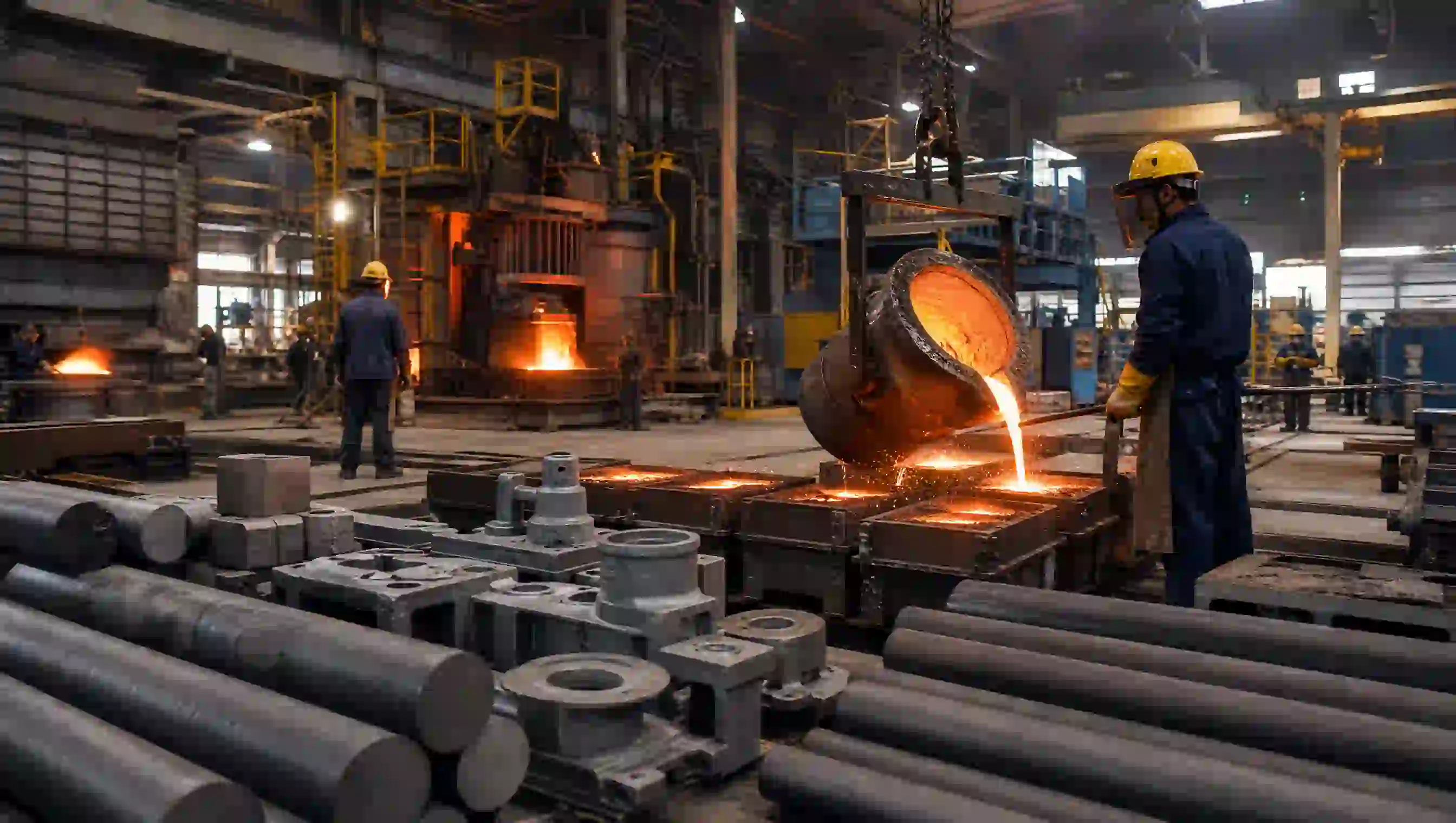
Iron casting is an industrial process that involves the pouring of molten iron into a mould and then allowing it to cool and solidify into a desired form. Cast Iron Casting is also known as CI casting in which various metal products are cast for engineering and mechanical works.
The activities of a cast iron foundry include the following: the melting; the preparation of moulds; the pouring of the mould; the cooling and inspection. Depending on the type of production and the material specification, the cast iron products can be round bars, machine parts, housings and other parts.
The cast iron casting manufacturing process consists of a number of steps which are responsible for determining the quality, size and performance of the final product.
The mould is made as per the shape and size required. In sand casting, the mould cavity is prepared by specially made sand; the shape of the mould cavity is the shape of the casting.
A furnace used for melting iron and appropriate charge materials. Chemical composition is controlled to aid in achieving the desired material properties.
The molten metal is poured into the prepared mould in controlled conditions. Proper pouring helps in getting good mould filling and solidification.
The molten metal cools and becomes solid inside the mould. The internal structure and properties of the material depends on the cooling conditions.
Once solidified, casting is taken out of the mould. Any surplus material is cut off and finishing is carried out as necessary. The last stage is dimensional check, chemical composition testing and mechanical property testing based on the agreement.
The controlled cast iron casting process assists in maintaining consistency and the detection of potential defects prior to acceptance.
There are different cast iron grades with different characteristics of materials. The selection of the proper grade is determined by the application, mechanical properties and design requirements.
Ganga R Ispat Metals has the following grade families:
| Grade Family | Available Grades | Key Characteristics |
|---|---|---|
| Grey Cast Iron | FG 200, FG 220, FG 260, FG 300 | Good machinability, compressive strength, and vibration-damping properties. |
| Ductile / SG Iron | SG 400/15, SG 450/10, SG 500/7, SG 600/3 | Higher ductility compared to grey cast iron. |
| EN-GJL Grades | EN-GJL-200, EN-GJL-250, EN-GJL-300 | Grey cast iron grades. |
| EN-GJS Grades | As per customer requirements | Ductile cast iron grades. |
Grey cast iron and ductile or SG iron are material families and should not be considered interchangeable. The accurate grade designation and properties required should be confirmed before ordering.
When buying grey cast iron, it is necessary to know the characteristics of the material in order to determine its suitability for a particular purpose. The characteristics are associated with the grade, composition, production and graphitic structure of the material.
Key characteristics include:
Grey Cast Iron Properties have a number of desirable attributes but it is not normally as ductile as SG iron. It should therefore correspond to the loading conditions and service requirements of the component.
The most popular casting techniques for common CI are listed below:
Ganga R Ispat Metals have two methods of manufacturing: Sand casting and Continuous casting. These methods differ in their characteristics and can be used in special cases when products have specific requirements.
The cast iron sand casting is a casting method that utilizes the prepared mould made of sand. Molten iron is cast into the mould cavity and allowed to solidify before the casting is taken out and trimmed. Depending on the design and manufacturing needs of the mould, this method can be used for various shapes and sizes.
The metal is cast using the continuous casting method to get metal continuously or semi-continuously in the form of desired length. Can be used for some bar and stock workpieces. Depending on the dimensions required, the grade of the materials, the form and use of the product the appropriate method must be used. Please be aware of the availability and specifications before ordering.
The Cast Iron Applications are many and varied, in relation to engineering and mechanical needs. The material is chosen based on its characteristics, design specifications and operating conditions.
Common applications include:
Suitability of the material depends on many factors such as load, temperature, wear resistance and corrosion resistance. Make sure that the material chosen is most appropriate.
It is important that the material be tested for its composition, mechanical behavior, and also adheres to the specified requirements.
Ganga R Ispat Metals offers chemical composition testing, mechanical property testing and an MTC for material verification.
Important Quality Tests to Consider:
This will be done to ensure the suitability of the materials for the customer and to maintain proper quality records. Before ordering, it is necessary to determine the test methods and inspection process.
In order to choose a trusted Cast Iron Manufacturer or cast iron supplier, it is not sufficient to simply look at the price. The buyer, in evaluating the requirements, should consider technical requirements, product availability and quality documentation.
Here are some things to keep in mind when ordering:
Specifications reduce the risk of buying the wrong materials, and ensure that the material provided complies with the specification.
Ganga R Ispat Metals produces and sells cast iron round bars of different lengths, diameters and grades to meet the customer's requirements. It can be used for grey cast iron, ductile or SG grades as per requirement and EN-GJL grades, EN-GJS grades.
Customers can talk with us about their needs for:
Buyers need to provide the necessary grade, size and application information so that they can communicate the product availability and testing requirements with Ganga R Ispat Metals.
CI casting is an important technique for manufacturing materials used in engineering and mechanical fields. It is important that the consumers have a good understanding about the manufacturing process, about what sets the different grades apart, as well as the properties of the materials and their testing. It is important to choose the right material and make sure that its properties are correct.
Looking for high-quality cast iron round bars in specific grades and dimensions? Ganga R Ispat Metals offers solutions tailored to your industrial requirements, including material testing and quality verification. Contact Us Now to discuss your specifications and request a quotation.
CI casting is a casting technique where liquid cast iron is poured into a mold and left to cool down to the desired form. It is typically utilized in manufacturing metal parts for engineering or mechanical purposes.
Cast iron comes in different grades; some of them are FG 200, FG 220, FG 260, FG 300, and SG irons like SG 400/15 and SG 500/7. The appropriate grade selection will depend on the strength, machining, and ductility among other factors.
The grey cast iron usually has good machinability and vibration damping capabilities. Ductile iron has better ductility and it can be able to accommodate deformation. Choice will depend on the type of the part being made.
The cast iron is applied in machine tools, mechanical parts, machine housings, pump parts and any engineering application. Choice of material will be dependent on the grade of material and operating condition of the part.
Sand casting involves the creation of a part in the desired shape by using a sand mold casting process. In continuous casting, metal billets can be produced in a continuous manner. The choice of the process would depend on the size and shape of the product.
Material grade, dimensions, chemical composition, and related mechanical properties can be tested. A Material Test Certificate (MTC) may also be obtained from Ganga R Ispat Metals.
Connect with our experts to source high-quality brass rods, bronze rods, copper alloys, and precision metal components tailored to your industrial requirements.