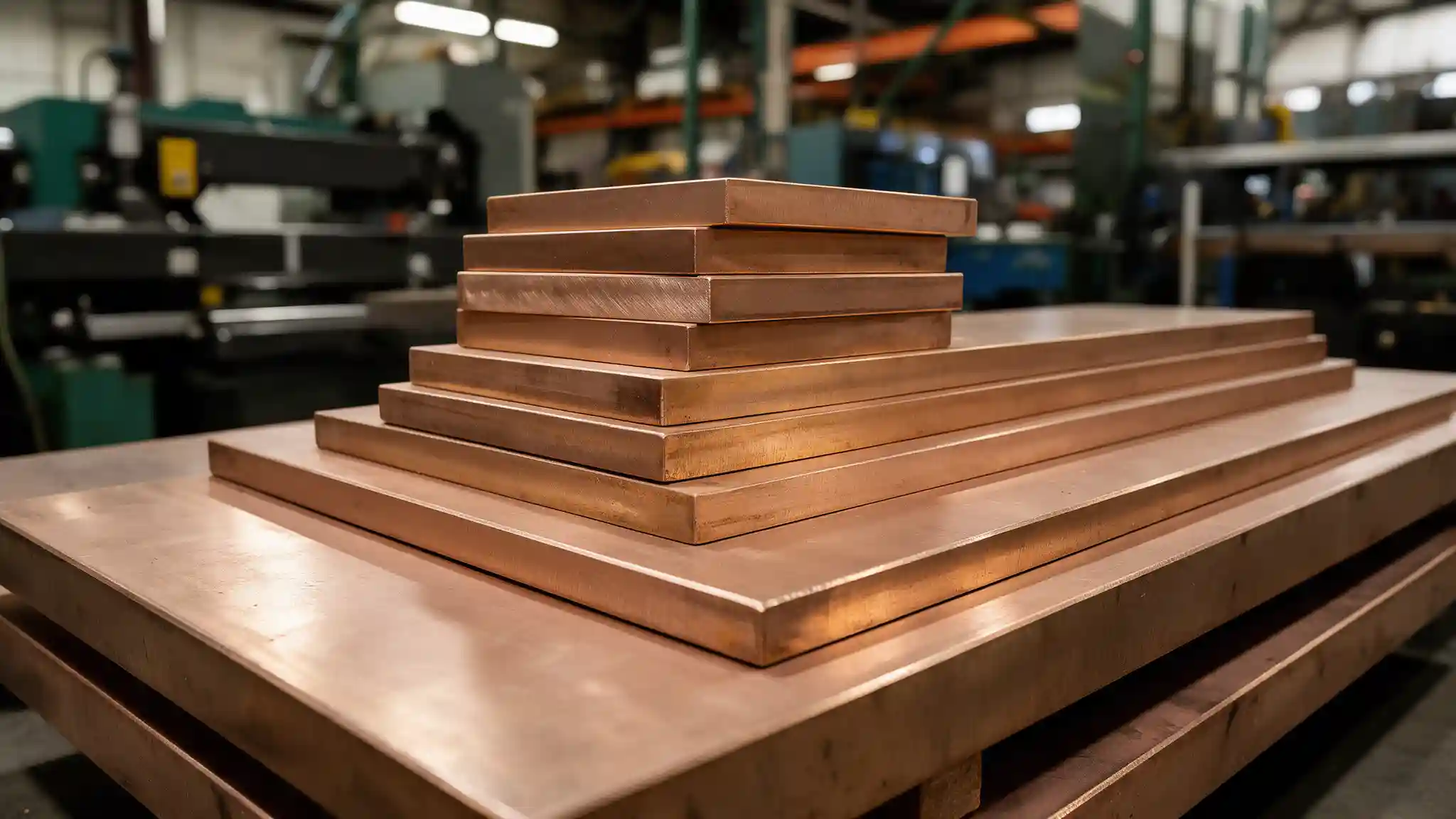
It's not "grab the cheapest and vibe" when it comes to picking Phosphor Bronze Plates for your project. Building specs, load, friction and conductivity requirements are far more important than sticker price. Take into account the working environment (heat, corrosion, wear) and secure dimensions early and never guess. Quality checks and good procurement ensure the deal. Smart selection will save major headaches now and in the future whether sourcing for pumps or industrial builds. Select carefully, construct well!
Okay, real talk — don't pick a plate just because it's sitting first on the search results. Examine how and what the component is doing on a daily basis: is it under strain from high load? Rubbing against something all the time? Living in a corrosive high moisture area? That's where phosphor bronze plate selection actually begins. Do a timeline of how long you need it to last before you're affected by usage. If you get this one wrong, even the best Phosphor Bronze Plates won't be able to save your project later.
Machines do not have to tell lies, they give hints of wear-and-tear where you don't expect it. Examine mechanical load, friction and frequency of parts moving against each other. Now add moisture, heat and corrosive exposure and it becomes more challenging. Understanding phosphor bronze properties helps here, since corrosion resistant bronze handles rough conditions way better than generic alloys.
Fun Fact: “Phosphor bronze was one of the first alloys ever patented (way back in 1871) — and it's still going strong in industries that demand serious durability.”
Here's a list of real factors that determine the behavior of a phosphor bronze alloy when it is used in a specific project — not opinion-based.
Fun Fact: “Adding just a small amount of phosphorus during production drastically boosts wear resistance — that's why phosphor bronze outperforms plain bronze in high-friction applications.”
The size is not a 'close enough' situation — it's one of those things where if you get it right up front, you will save time and money on rework later on. Always remember that Phosphor Bronze Plate Thickness should be found by referring to the component drawing, never from an educated guess or an industry average.
For parts that have close tolerances, width, length and tolerances must match the exact specifications of the project. Remembering to allow for machining – always leave a bit extra to make sure finishing doesn't affect dimensionality.
Correct phosphor bronze plate dimensions minimize material waste and assembly mismatches.
The thing no one tells you up front is that a well-done, spec sheet can still turn into a nightmare on the shop floor. Smooth phosphor bronze machining means your team is not having to battle the metal every time they cut, drill or bend. Some work finishes require improved surface consistency, so take this into account early, rather than when tools begin to wear. A solid phosphor bronze plate should feel easy to work with, not like it's testing your patience or your production deadline.
Fun Fact: “Phosphor bronze forms a natural protective oxide layer over time — this is exactly why it resists corrosion so well, even in marine or high-moisture environments.”
Quality is not assumed, it's verified before its plates hit your production line:
Good and consistent Phosphor Bronze Plate Quality is only achieved with documented testing, not just by sight. Quality phosphor bronze plates are about working with suppliers who support each batch with a record of the data.
Paperwork is not an option, it's a proof for buyers. Chemical composition, mechanical strength and batch information is confirmed on the proper phosphor bronze plate certificate, which also demonstrates conformity to industry standards. Immediately before ordering, especially for essential applications, material test certificates and traceability records should be always requested. Only documented tests, not just visual, will yield good and consistent phosphor bronze plate quality. Quality phosphor bronze plates are close to working with suppliers that can provide a record of the data.
Let's face it, even the best grades won't make up for it when your order arrives late or doesn't meet your actual requirements.
The right phosphor bronze plate supplier is more than just a vendor: he feels like a partner.
Not all suppliers are created equal, and selecting the right one will spare you headaches down the road:
As a reliable phosphor bronze plate supplier, they support all their claims with proof rather than promises. This is why Ganga R Ispat Metals is regarded as one of the reliable options to choose from when looking for a phosphor bronze plate manufacturer.
Ultimately, you are looking to match the grade, size and conditions of your specific application with Phosphor Bronze Plates, not to get the best price. Ease of fabrication and verified quality is as important for long-term performance. This process becomes easier and hassle-free when done with an experienced phosphor bronze plate manufacturer like Ganga R Ispat Metals.
|
Explore Ganga R Ispat Metals’ range of phosphor bronze plates and choose the right grade, size, and specifications for your industrial requirements. Contact Us Now to discuss your project needs. |
Grade selection depends on the strength, wear resistance, and corrosion conditions your application demands. Fabrication requirements and applicable industry specifications also play a role. Matching phosphor bronze plate grades to your actual project drawings ensures better long-term performance and fewer surprises during production.
Thickness depends on your component design, expected load, and machining allowance needed for finishing. Engineering drawings should always guide the final decision. Getting phosphor bronze plate thickness right upfront avoids costly rework or fitment issues later in the process.
Before buying phosphor bronze plates, verify grade, dimensions, and tolerances against your specifications. Check surface condition, request certificates, and confirm testing documentation is available. Supplier capabilities, including production capacity and reliability, matter just as much as the material itself.
Yes, availability of custom phosphor bronze plates depends on the manufacturer's production capabilities and your required quantity. Non-standard dimensions are often possible for specific project needs. Always confirm customization options and lead times directly with your supplier before finalizing.
Phosphor bronze naturally offers strong resistance to corrosion, especially in moist or marine-like environments. This makes it a preferred choice for pumps, bushings, and components exposed to harsh conditions. However, actual performance still depends on the specific grade and composition chosen.
Lead times vary based on quantity, customization needs, and current production schedules. Standard sizes usually ship faster than custom-cut plates. It's always best to confirm exact timelines with your supplier early, especially for time-sensitive project deadlines.
Connect with our experts to source high-quality brass rods, bronze rods, copper alloys, and precision metal components tailored to your industrial requirements.