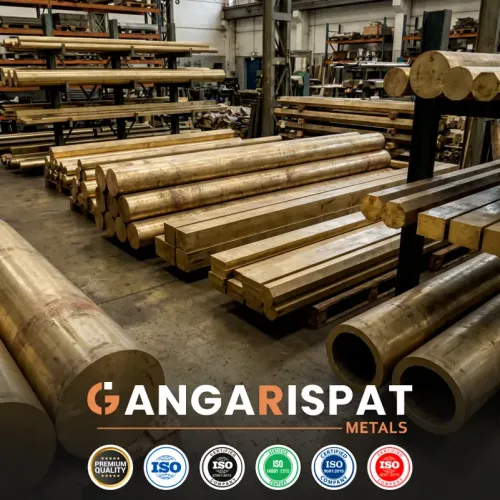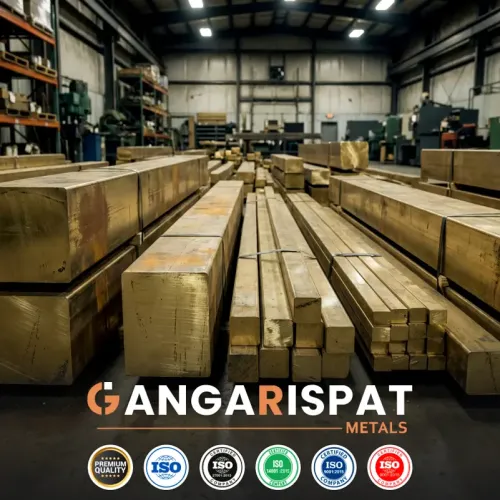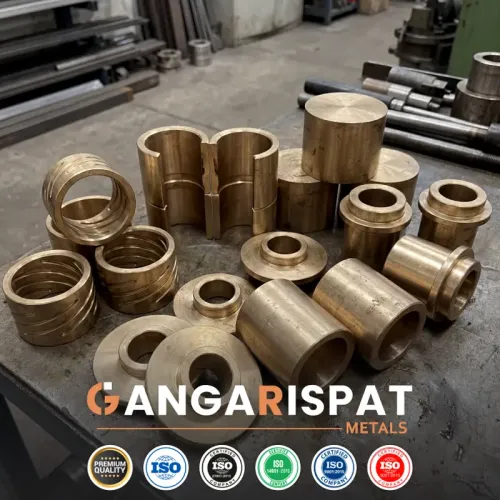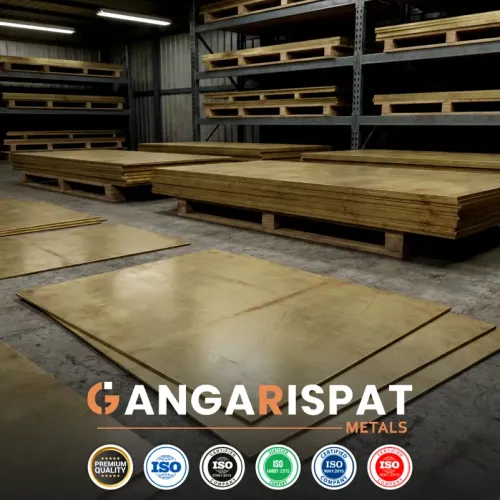


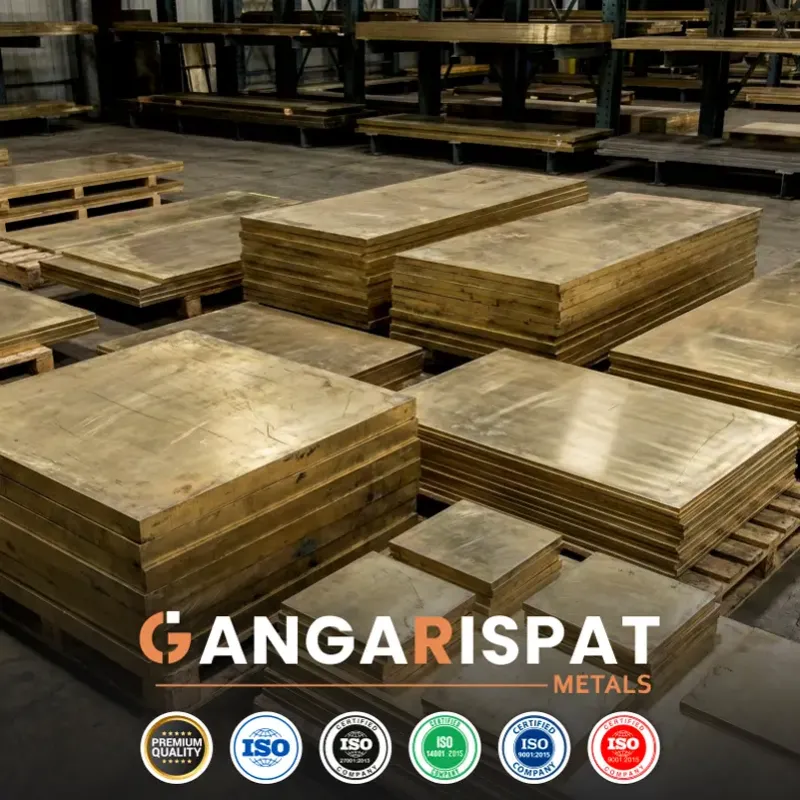

The main reasons why Brass Plates are preferred include projects which require durability of surfaces, flexibility of fabrication, as well as refined visual appearance in a single material. These plates are made of controlled-alloy brass alloys that suit well during shearing, punching, bending and forming processes without deterioration of structural stability. They are resistant to oxidation and daily exposure to the environment, hence can be used in electrical boards, equipment covers, identification plates, architectural trims and custom panels. Regular thickness and metallurgical consistency make it easy to finish and achieve regular quality production.
Besides functional strength, a natural metallic look on brass plates gives exposed surfaces a boost without the excessive use of heavy surface treatment. Brass plates are durable and offer a reliable solution in both engineered and decorative fabrication work, with their easy maintenance and long service life.
The Brass Plate Manufacturers in India, like the Ganga R Ispat Metals, are used in industries that need to be in a flat form with uniform thickness and mechanical behaviour that is reliable to be used in fabrication and machining. Our Brass Plates are made by controlled alloy preparation, casting, rolling, levelling, and precision finishing to obtain uniform thickness and smooth surface finish. A lot of production is checked based on chemical composition testing, mechanical property testing, flatness and surface integrity tests with advanced in-house quality systems. Our Brass Plates are extensively employed in electric panels, heat exchangers, building elements, and industrial equipment and have been utilised in high-pressure machine assemblies where the uniformity of the material has a direct effect on performance.
Brass Plates In India are used in applications where there are cutting, bending, drilling, stamping, and surface finishing operations. We have plates of various standard thicknesses in addition to customised sizes that have been made to fit engineering and fabrication requirements. Our Brass Plates have controlled metallurgy and homogeneous grain structure that allows them to be predictable during machining and forming processes. Our plates are used by fabricators and OEMs, in which unevenness of thickness or surface anomalies may influence the fitting of components and operational performance.
Being Brass Plates Suppliers in India, we are concerned with the specification accuracy, reliable supply, and delivery that is adjusted to the production planning. Brass Plates are each subjected to the verification of the spectrometer and thickness calibration, flatness checking inspection, and surface quality checking before sending. Our combined manufacturing control is such that repeat tolerances, consistent mechanical characteristics and quality are achieved amongst batches.
|
Material Category |
Product Form |
Process Control Method |
Typical Application |
|
Brass alloys |
Plates |
Moulded casting and rolling. |
Electrical enclosures and electrical panels. |
|
Brass alloys |
Plates |
Thickness calibration |
Cover of heat exchangers and equipment. |
|
Brass alloys |
Plates |
Surface finishing control |
Ornament and architectural elements. |
|
Brass alloys |
Custom plates |
Drawing-based execution |
Project-specific and OEM parts. |
We also offer technical assistance and a reliable supply of properly specified plates through our Brass Plates Dealers in India. Our dealer chain keeps regional stocks, handles timely supplies and serves fabricating units, contractors and manufacturing plants with ready material supply.
Such an organised system of distribution enhances the reliability of supply and consumer confidence.
|
Standard Framework |
Evaluation Area |
Manufacturing Alignment |
|
IS Standards |
Chemical and dimensional parameters. |
Manufacturing based on the customer-based requirements of the IS. |
|
ASTM Standards |
Mechanical tolerances and mechanical performance. |
Manufacturing capacity according to the ASTM requirements. |
|
Customer Drawings |
Flatness and size accuracy |
Implementation as per the drawn-up drawings. |
|
Export Compliance |
Traceability and documentation. |
Inspection-supported reporting |
Being the Brass Plates Exporters in India, Ganga R Ispat Metals manages to provide the international customer with the precision-made Brass Plates, but with the strict inspection and documentation rules. Export consignments are also made ready to conform to global fabrication and engineering standards using approved test certificates, secure packaging, and full traceability. Foreign customers choose our Brass Plates to be used in applications where dimensional control and consistency of surface finish and reliable material performance are essential.
In case you need to apply a consistent thickness, polished surface finish, and reliable quality of brass, Ganga R Ispat Metals is prepared to assist your request. Being Brass Plates Manufacturers, Suppliers, Dealers, and Exporters, we provide engineered Brass Plate solutions by exercising control of processes, technical validation and assurance of reliable supply planning. Get in touch with us and tell us about specifications, custom plate sizes and performance-driven Brass plates to use in the industry and fabrication department.
| Mechanical Property | Metric Units | English Units |
|---|---|---|
| Tensile Strength | 300 – 550 MPa | 44 – 80 ksi |
| Yield Strength (0.2% Proof) | 120 – 350 MPa | 17 – 51 ksi |
| Elongation | 10 – 45 % | 10 – 45 % |
| Hardness (Brinell, HB) | 80 – 150 HB | 80 – 150 HB |
| Modulus of Elasticity | 100 – 110 GPa | 14.5 – 16.0 Msi |
| Shear Strength | 200 – 350 MPa | 29 – 51 ksi |
| Fatigue Strength | 120 – 200 MPa | 17 – 29 ksi |
| Impact Resistance | Moderate | Moderate |
| Wear Resistance | Good | Good |
| Creep Resistance (≤200 °C) | Good | Good |
| Property | Typical Value |
|---|---|
| Tensile Strength | 350 – 500 MPa |
| Yield Strength | 200 – 350 MPa |
| Elongation | 10 – 25 % |
| Hardness | 100 – 150 HB |
| Machinability Rating | ≈100 % |
| Wear Resistance | Very Good |
| Property | Typical Value |
|---|---|
| Tensile Strength | 300 – 450 MPa |
| Yield Strength | 120 – 300 MPa |
| Elongation | 20 – 45 % |
| Hardness | 80 – 120 HB |
| Cold Workability | Excellent |
| Impact Resistance | Good |
| Property | Typical Value |
|---|---|
| Tensile Strength | 320 – 480 MPa |
| Yield Strength | 150 – 320 MPa |
| Elongation | 15 – 35 % |
| Hardness | 85 – 130 HB |
| Wear Resistance | Good |
| Property | Typical Value |
|---|---|
| Tensile Strength | 380 – 520 MPa |
| Yield Strength | 200 – 350 MPa |
| Elongation | 15 – 30 % |
| Hardness | 100 – 140 HB |
| Corrosion Resistance | Excellent |
| Stress Cracking Resistance | Excellent |
| Property | Typical Value |
|---|---|
| Tensile Strength | 350 – 500 MPa |
| Yield Strength | 180 – 320 MPa |
| Elongation | 12 – 30 % |
| Hardness | 95 – 140 HB |
| Surface Finish Quality | Excellent |
| Property | Typical Value | Units | Notes |
|---|---|---|---|
| Density | 8.4 – 8.7 | g/cm³ | Depends on alloy composition |
| Melting Point | 900 – 940 | °C | Varies with Zn content |
| Thermal Conductivity | 100 – 120 | W/m·K | Good heat conductor |
| Electrical Conductivity | 15 – 28 | MS/m | Depends on Zn and Pb content |
| Coefficient of Thermal Expansion | 19 – 21 | µm/m·°C | Linear expansion for temperature changes |
| Specific Heat Capacity | 380 – 390 | J/kg·K | Typical for most brass grades |
| Magnetic Properties | Non-magnetic | – | Brass is diamagnetic |
| Machinability | 60 – 100 % | – | Leaded brass grades highest machinability |
| Corrosion Resistance | Moderate to Excellent | – | Naval/Architectural grades better in water/air |
| Hardness (Annealed) | 80 – 150 HB | Brinell | Varies by grade |
| Property | Typical Value | Units | Notes / Grade-Specific Info |
|---|---|---|---|
| Melting Point | 900 – 940 | °C | Depends on zinc content; higher Zn lowers melting point |
| Solidus Temperature | 900 – 910 | °C | Start of melting range |
| Liquidus Temperature | 920 – 940 | °C | Fully molten state |
| Thermal Conductivity | 100 – 120 | W/m·K | Free-Cutting & Cartridge brass higher (~110–120 W/m·K) |
| Coefficient of Thermal Expansion | 19 – 21 | µm/m·°C | Linear expansion over 20–100°C |
| Specific Heat Capacity | 380 – 390 | J/kg·K | Slightly lower for high-Zn alloys |
| Thermal Diffusivity | 0.11 – 0.13 | mm²/s | Rate of heat conduction through material |
| Heat Resistance / Service Temp | ≤200 | °C | Prolonged service beyond 200°C reduces mechanical properties |
| Thermal Shock Resistance | Moderate | – | Free-Cutting brass better due to machinability; naval brass moderate |
| Conductivity Ratio (to Copper) | 30 – 60 % | – | Brass conducts less than pure copper |
| Standard System | Grade / Designation | Equivalent / Common Trade Name |
|---|---|---|
| ASTM / UNS (USA) | C21000 | Cartridge Brass |
| C22600 | Yellow Brass | |
| C23000 | Admiralty / Naval Brass | |
| C24000 | Commercial Brass | |
| C26000 | Cartridge Brass | |
| C26800 | Naval Brass | |
| C27200 | Yellow Brass | |
| C28000 | Architectural / Special Brass | |
| British Standard (BS 1400) | CZ 101 | Cartridge Brass |
| CZ 102 | Yellow Brass | |
| CZ 103 | Free-Cutting Brass | |
| CZ 106 | Naval Brass | |
| CZ 107 | Architectural Bronze | |
| CZ 108 | Clock Brass | |
| CZ 109 | Clock Brass / Leaded Brass | |
| Euro Standard (EN / CW) | CW500L – CW509L | Cartridge / Yellow / Free-Cutting / Naval / Architectural Brass |
| Indian Standard (IS) | IS: 319 / 89 – C260 | Cartridge Brass |
| IS: 320 / 80 – C272 | Yellow Brass | |
| ISO / EN | EN 12163 – CW501L | Cartridge Brass |
| EN 12164 – CW502L | Yellow Brass | |
| EN 12165 – CW503L | Free-Cutting Brass | |
| EN 12167 – CW504L | Naval Brass | |
| EN 12168 – CW505L | Architectural Bronze |
| Grade / Designation | Standard Width (mm) | Standard Length (mm) | Thickness Range (mm) | Notes / Customization |
|---|---|---|---|---|
| Free-Cutting Brass (C36000 / CZ103 / CW503L) | 500 – 1500 | 1000 – 3000 | 1.0 – 25.0 | Custom sizes available on request |
| Cartridge Brass (C26000 / CZ101 / CW500L) | 500 – 1500 | 1000 – 3000 | 1.5 – 30.0 | Suitable for deep drawing and forming |
| Yellow Brass (C26800 / C27200 / CZ109) | 500 – 1500 | 1000 – 3000 | 2.0 – 30.0 | Standard engineering and decorative sizes |
| Naval Brass (C46400 / CZ106) | 500 – 1200 | 1000 – 2500 | 2.0 – 20.0 | Marine-grade; corrosion-resistant plates |
| Architectural Brass / Bronze (C38500 / CZ125) | 500 – 1500 | 1000 – 3000 | 1.5 – 25.0 | Polished / decorative finishes recommended |
| Width × Thickness (mm) | Width × Thickness (inch) | Weight (kg/m) | Weight (lbs/ft) |
|---|---|---|---|
| 10 × 3 | 0.394 × 0.118 | 0.26 | 0.17 |
| 12 × 3 | 0.472 × 0.118 | 0.32 | 0.22 |
| 15 × 3 | 0.591 × 0.118 | 0.4 | 0.27 |
| 20 × 3 | 0.787 × 0.118 | 0.53 | 0.36 |
| 25 × 3 | 0.984 × 0.118 | 0.66 | 0.44 |
| 30 × 3 | 1.181 × 0.118 | 0.79 | 0.53 |
| 40 × 3 | 1.575 × 0.118 | 1.06 | 0.71 |
| 50 × 3 | 1.969 × 0.118 | 1.32 | 0.89 |
| 60 × 3 | 2.362 × 0.118 | 1.58 | 1.06 |
| 80 × 3 | 3.150 × 0.118 | 2.09 | 1.4 |
| 100 × 5 | 3.937 × 0.197 | 4.4 | 2.96 |
| 120 × 5 | 4.724 × 0.197 | 5.28 | 3.55 |
| 150 × 6 | 5.906 × 0.236 | 7.89 | 5.3 |
| 200 × 10 | 7.874 × 0.394 | 17.6 | 11.82 |
| 250 × 12 | 9.843 × 0.472 | 26.18 | 17.57 |
| 300 × 15 | 11.811 × 0.591 | 39.42 | 26.46 |
| 400 × 20 | 15.748 × 0.787 | 70.2 | 47.12 |
| Grade (UNS) | Cu % | Zn % | Pb % | Sn % | Others / Notes |
|---|---|---|---|---|---|
| C21000 | 70 | 30 | 0 | 0 | Cartridge Brass |
| C22600 | 67 | 33 | 0 | 0 | Yellow Brass |
| C23000 | 60 | 39 | 1 | 0 | Admiralty / Naval Brass |
| C24000 | 80 | 20 | 0 | 0 | Commercial Brass |
| C26000 | 70 | 30 | 0 | 0 | Cartridge Brass |
| C26800 | 59–63 | 37–41 | 1–2 | 0 | Naval Brass |
| C27200 | 70 | 30 | 0–1 | 0 | Yellow Brass |
| C28000 | 85 | 15 | 0 | 0 | Architectural / Special Brass |
| C330 | 62 | 36 | 1–2 | 0 | Free-cutting / Leaded Brass |
| C353 | 63 | 37 | 0–1 | 0 | Clock Brass |
| C360 | 61–64 | 35–37 | 1.5–3 | 0 | Free-cutting Leaded Brass |
| C385 | 60 | 40 | 0 | 0 | Architectural Bronze |
| C464 | 61–64 | 35–37 | 1.5–3 | 0 | Free-cutting Leaded Brass |
| BS Grade | Cu % | Zn % | Pb % | Sn % | Notes |
|---|---|---|---|---|---|
| CZ101 | 70 | 30 | 0 | 0 | Cartridge Brass |
| CZ102 | 70 | 30 | 0–1 | 0 | Yellow Brass |
| CZ103 | 61–64 | 35–37 | 1.5–3 | 0 | Free-Cutting Brass |
| CZ106 | 59–63 | 37–41 | 1–2 | 0 | Naval Brass |
| CZ107 | 60 | 40 | 0 | 0 | Architectural Bronze |
| CZ108 | 63 | 37 | 0–1 | 0 | Clock Brass |
| CZ109 | 63 | 37 | 0–1 | 0 | Clock / Leaded Brass |
| EN / CW Grade | Cu % | Zn % | Pb % | Sn % | Notes |
|---|---|---|---|---|---|
| CW500L – CW509L | 59–85 | 15–41 | 0–3 | 0 | Cartridge / Yellow / Free-Cutting / Naval / Architectural Brass |
| IS Grade | Cu % | Zn % | Pb % | Sn % | Notes |
|---|---|---|---|---|---|
| IS: 319/89 – C260 | 70 | 30 | 0 | 0 | Cartridge Brass |
| IS: 320/80 – C272 | 70 | 30 | 0–1 | 0 | Yellow Brass |
| Process Stage | Description / Notes |
|---|---|
| Melting / Alloying | Copper and zinc (and other alloying elements such as lead, tin) are melted in a furnace. Precise composition is maintained according to grade requirements. |
| Casting | Molten brass is poured into ingots or slabs. Continuous casting is often used for large-scale production. Slabs are cooled uniformly to reduce internal stresses. |
| Hot Rolling | Brass slabs are heated and passed through rolling mills to reduce thickness and achieve desired plate dimensions. This improves grain structure and mechanical properties. |
| Annealing | Plates are annealed (heated to 450–650°C depending on grade) to improve ductility and relieve stresses from rolling. |
| Cold Rolling / Finishing | Further reduction in thickness may be performed at room temperature to achieve precise dimensions, improved surface finish, and desired mechanical properties. |
| Surface Treatment / Cleaning | Plates are pickled, descaled, or polished to remove oxides and impurities formed during hot rolling or annealing. |
| Cutting / Shearing | Brass plates are cut to required sizes using shearing machines, laser cutting, or water-jet cutting. |
| Quality Inspection | Plates are inspected for thickness, flatness, surface defects, chemical composition, and mechanical properties. |
| Final Finishing | Surface finishing such as polishing, brushing, or coating (if required) is applied. |
| Packing / Dispatch | Plates are stacked, wrapped, and packed safely for transportation to prevent damage or corrosion. |
| Finish Technique | Description / Notes |
|---|---|
| Cold Rolling / Polishing | Produces smooth, bright surface; improves flatness and dimensional accuracy. |
| Brushing / Satin Finish | Creates decorative, uniform lines; often used for architectural applications. |
| Buffing / Mirror Finish | High-gloss finish for decorative and aesthetic purposes. |
| Pickling / Chemical Cleaning | Removes oxides and impurities formed during hot rolling or annealing; prepares surface for plating or coating. |
| Electroplating / Coating | Optional protective or decorative coatings such as nickel, chrome, or lacquer for corrosion resistance and shine. |
| Mechanical Grinding / Sanding | Smoothens rough surfaces, removes mill marks, and prepares for polishing or coating. |
| Lacquering / Clear Coating | Protective coating to prevent tarnishing, often used for decorative or architectural brass plates. |
| Oxidation / Patination | Intentional color change for decorative applications; controlled chemical treatment creates antique or aged appearance. |
| Surface Inspection | Ensures no scratches, dents, or defects; critical for aesthetic and functional quality. |
| Industry | Typical Applications / Uses |
|---|---|
| Electrical & Electronics | Terminal strips, bus bars, electrical connectors, switchgear components, PCB contacts. |
| Automotive & Transport | Radiators, heat exchangers, decorative trim, engine components, bearings, bushings. |
| Marine & Shipbuilding | Naval fittings, propeller shafts, corrosion-resistant plates, seawater valves, deck fixtures (Naval Brass preferred). |
| Architectural & Decorative | Cladding, panels, railings, handrails, decorative trims, facades, signage, interior design elements. |
| Mechanical & Engineering | Gears, washers, flanges, couplings, shafts, structural plates, precision machined parts. |
| Aerospace & Aviation | Bearing plates, bushings, structural components, high-reliability connectors (lightweight grades). |
| HVAC & Plumbing | Water valves, fittings, heat exchangers, pump components, condenser plates. |
| Industrial Machinery | Bearings, bushings, wear-resistant surfaces, pressure vessels, guide plates. |
| Consumer Goods | Musical instruments, kitchenware, decorative hardware, trophies, plaques. |
| Defense & Military | Ammunition casings, vehicle components, marine equipment, specialty fittings. |
Packaging is a major part of every delivery, and we understand it very well. We supply many types of metals and other industrial metal products to make sure they reach our customers safely. We know products face many types of problems, such as vibration, moisture and rough handling therefore we follow a careful and organised packaging process. Our goal is simple: we deliver every product in the same strong and perfect condition as when it leaves our facility.
We check every order before packing it. The size, straightness, surface quality, grade, and quantity of each rod and bar are checked. We ensure that the material is correct as per the customer request. Once inspected, we sort the products by their size and grade of material. This will ensure that we maintain the order in everything and prevent errors in dispatch. Bundling and loading are also simpler and quicker.
After these steps, make sure to arrange the products in proper alignment so that they are straight and balanced. Then they are strapped down with industrial grade strapping. These straps keep the bundle secure during lifting and transportation. We include additional support to shorten bending or movement in longer rods. We also ensure that the straps do not tear the edges or the surface of the material. This cautious wrapping ensures the merchandise is secure throughout the delivery and transportation.
Sometimes metal can be damaged by moisture and changing weather conditions. We apply protective methods based on the shipment type and destination. We may use anti-rust coatings, moisture-resistant wrapping, or protective covers to prevent them. Our additional cover against humidity and corrosion is given to export shipments and coastal deliveries. These will assist us to retain the shine, surface finish and integrity of our metal products in the long-distance transportation.
In case of large orders and/or shipments to the export market, we offer extra protection. We pack them on heavy pallets or stuff them into tough wooden structures that can be transported all over the world. The packaging is dependent on the size and weight of the shipment. We ensure that the packing is able to withstand packing pressure and movement of containers. This strong outer coating secures the materials throughout their long trips, port services and storage in warehousing.
We have proper lifting equipment such as forklifts and cranes to load materials. Our team places the bundles carefully inside trucks or containers. We place them in such a manner that they do not roll or shift during the transportation. We balance the weight to minimise the weight on any section of the shipment. Our safe loading methods give us the chance to reduce the chances of being damaged in transit, whether it is along the road or the sea.
Ganga R Ispat Metals distributes its products in India and also in overseas markets. We provide transportation with trusted logistics vendors. In the case of domestic deliveries, we organise road transportation. In export orders, we meet the international shipping standards and container loading requirements. Each shipment will be planned based on the delivery schedules to make it arrive on time. Our well organized transport system assists us in delivering products in an efficient and safe way.
We make ready all papers preceding dispatch. These documents can be invoices, packing lists, and required certificates. Proper documentation assists in easy transportation and reduced time in clearance of customs when making export shipments. We have good records to promote transparency and professional service.
A well-structured packaging and transportation process directly impacts product performance upon delivery. Our approach ensures:
We believe that packaging is not just about wrapping materials — it is about protecting the value and reliability of the product until it reaches the client.
In Ganga R Ispat Metals, we suppose that safe packaging and transportation ensure the value of our products. To avoid bending, scratches, and corrosion, we make every effort to avoid transit damage. We consider packaging as our quality responsibility. We have a standard process; however, our packing techniques are changed according to the product size, order quantity, and destination.
We ensure that all the rods and bars are sold to our customers in a powerful, secure and working condition. We offer secure packaging or assured transportation as an additional service.

Yes. Brass stays protected from corrosion and tarnishing, which keeps performance and appearance for a longer time.
Brass plates can be provided in multiple thicknesses and cut to sizes to satisfy different fabrication or production needs.
Brass plates have excellent machinability, which means tools have little wear while cutting, drilling, and shaping.
Yes. Brass plates have an attractive finish and good strength which work well for both engineering components and decorative purposes.
Brass Plates are preferred for high strength, corrosion resistance, and smooth surface finish, making them ideal for electrical equipment, marine hardware, architectural fittings, and precision fabrication work.
Brass Plates are available in grades like C260, C272, C360, and C464, in various thickness ranges with custom cut sizes suitable for industrial and export requirements.


















Connect with our experts to source high-quality brass rods, bronze rods, copper alloys, and precision metal components tailored to your industrial requirements.