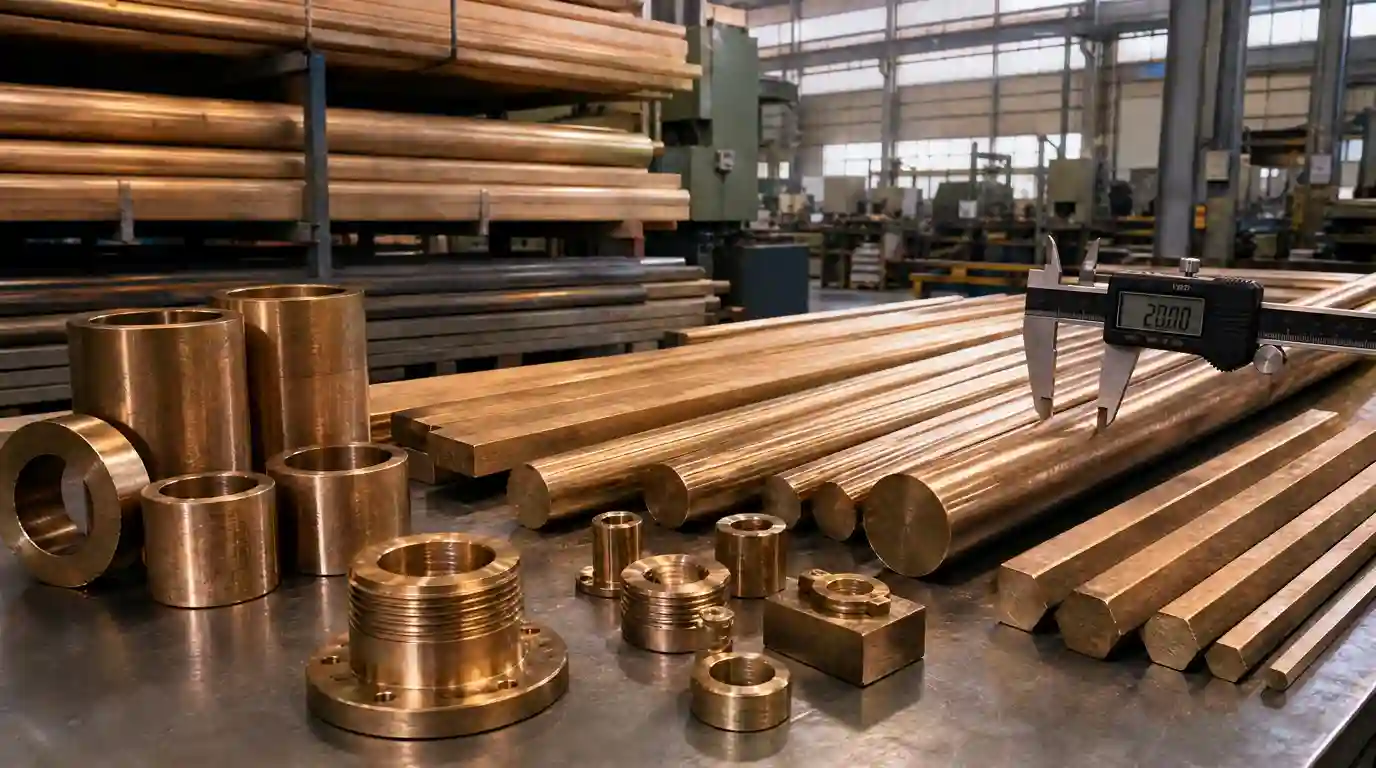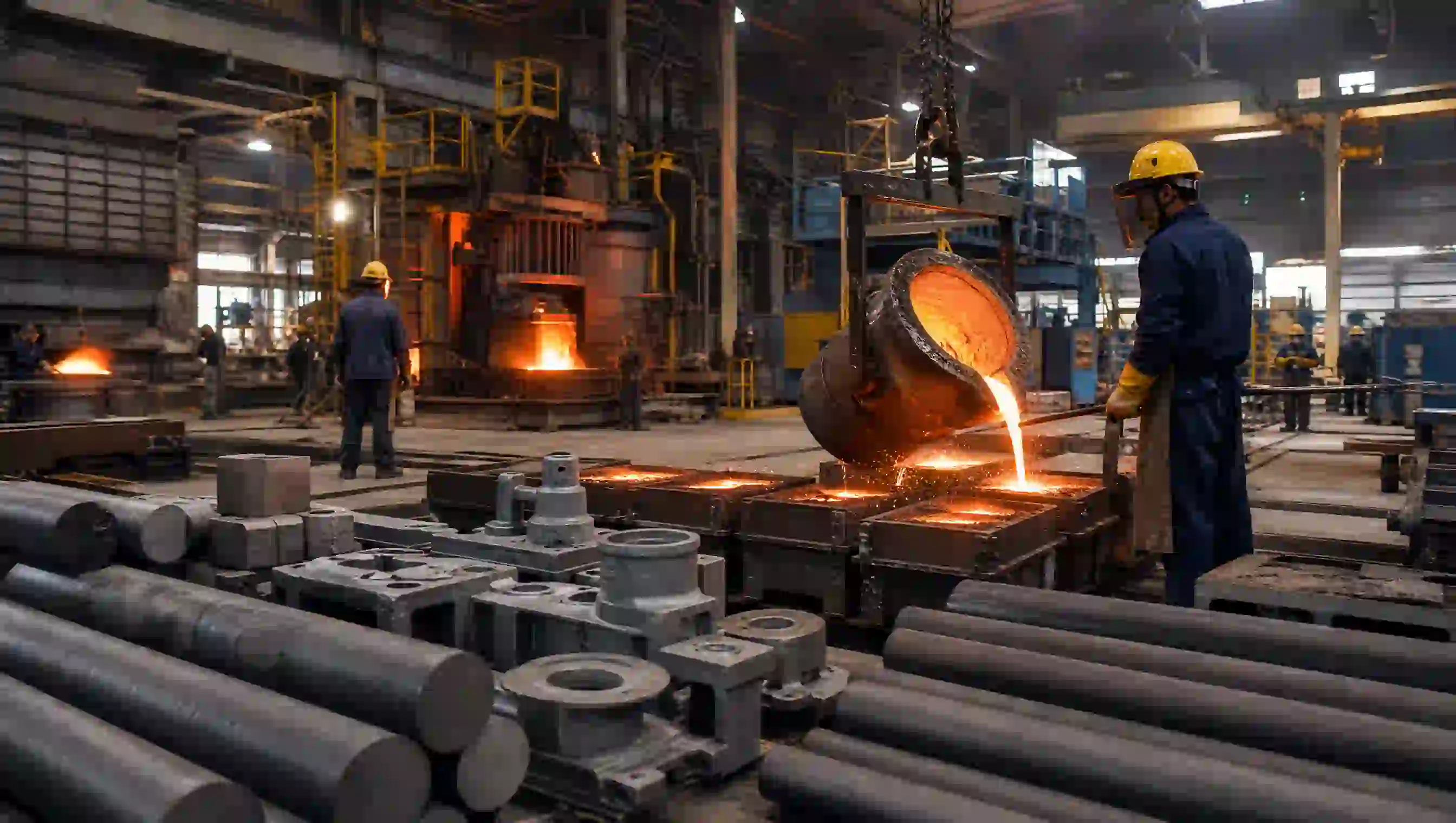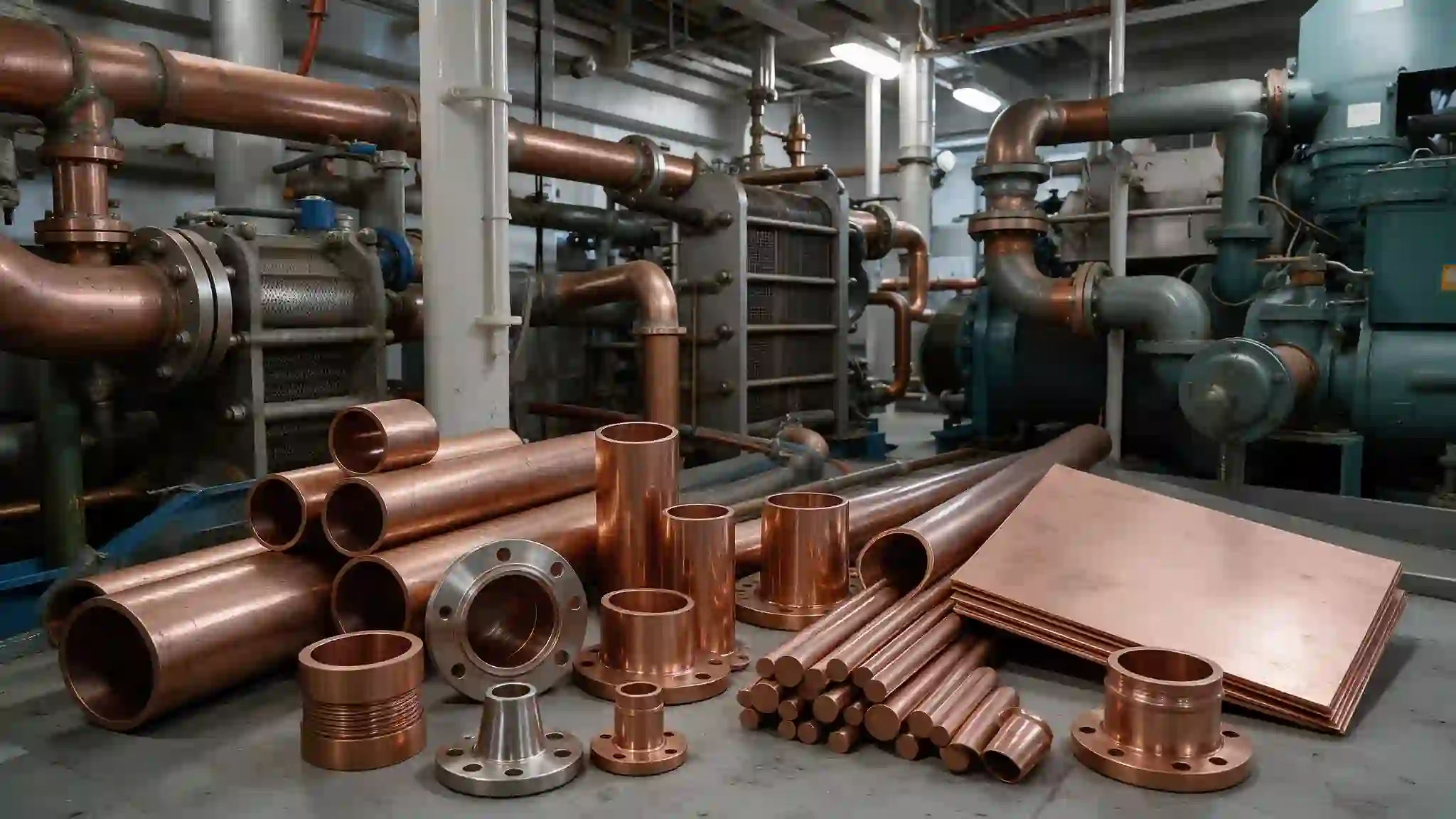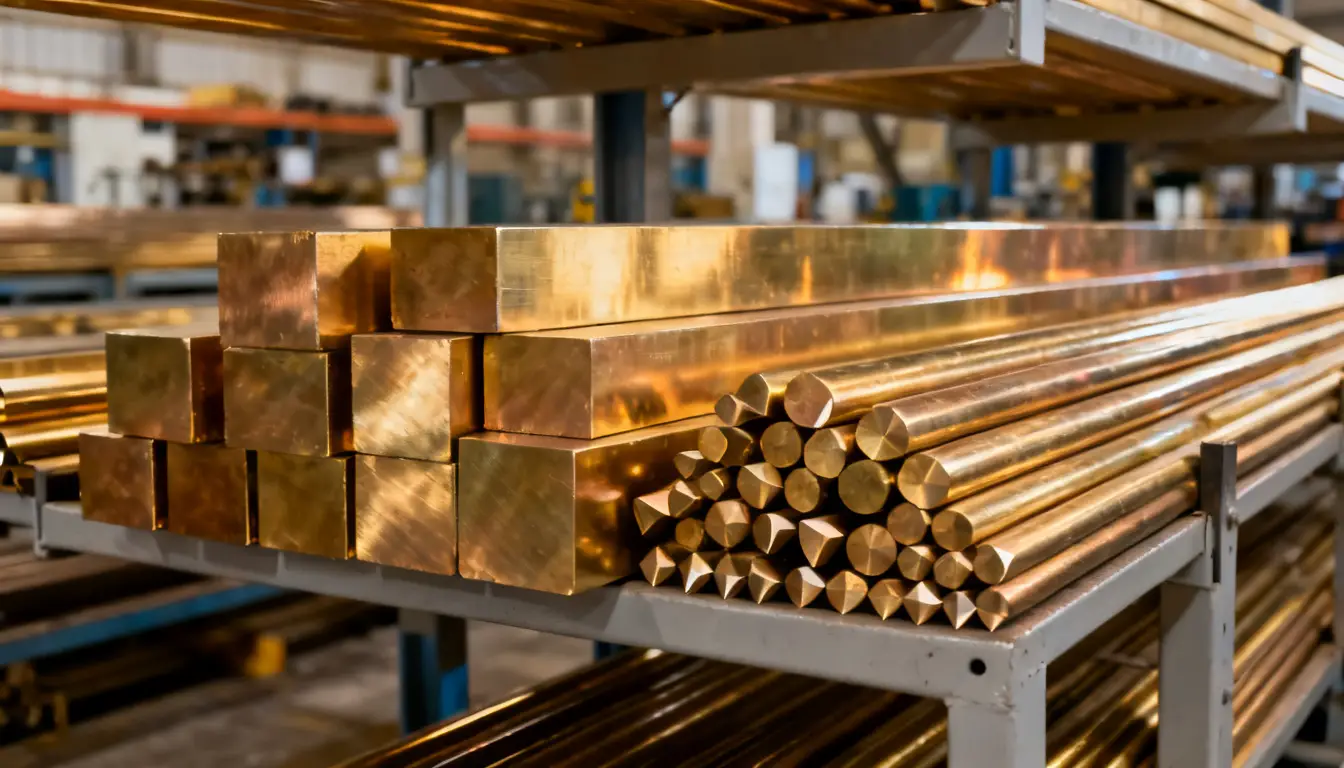
Nobody picks aluminum bronze on a whim. Usually there's a backstory – a valve that failed six months into a marine installation, a bearing that wore through faster than the maintenance schedule expected, or a safety audit that flagged sparking risk on the shop floor. That's typically when someone runs the numbers on this alloy and wonders why they didn't switch sooner. The aluminium bronze bars sitting in most industrial stockrooms didn't get there by accident. They earned that spot, job by job.
Before anything else, here's the short version of why this alloy gets specified so often:
Aluminium bronze composition centres on copper — 81 to 92 percent is the typical range. Aluminium runs between 6 and 14 per cent. Iron, nickel, and manganese come in depending on the grade you're working with. Push iron higher and wear resistance goes up. Add more nickel and you get better performance at elevated temperatures.
The part that surprises people: aluminium at these ratios causes a thin oxide film to form across the surface. It's self-regenerating — scratch through it and it closes back up. That's not a coating you apply; it's a reaction baked into the alloy. A bronze bar built this way resists corrosion year after year with zero maintenance input. That's the real selling point, and it's structural, not cosmetic.
General benchmarks for aluminium bronze as an engineering material — not grade-specific or size-specific:
| Property | Characteristic | Why It Matters | Common Use |
|---|---|---|---|
| Tensile Strength | 550–900 MPa | Holds under heavy mechanical loads | Gears, structural parts |
| Corrosion Resistance | Excellent | Survives seawater and industrial chemicals | Marine valves, pump bodies |
| Hardness | 140–220 HB | Cuts wear in sliding-contact applications | Bearings, bushings, sleeves |
| Non-Sparking | Yes | Safe around flammable or explosive material | Mining, oil & gas tools |
| Service Temperature | Up to ~400°C | Stable across moderate heat ranges | Heat exchangers, tooling |
Six things that genuinely matter — not padded-out feature lists:
Where this material actually turns up in practice:
Propeller shafts, sea valves, rudder bearings. Salt, pressure, and biofouling are constant. This alloy handles all three without needing surface protection that degrades over time.
All bronze bars appear in subsea components, downhole tools, and valve seats. Non-sparking plus corrosion-resistant in a single alloy is a rare combination at this price point.
Landing gear bushings, hydraulic fittings, and structural brackets. Strength-to-weight ratio and corrosion resistance, without the cost or machining difficulty of more exotic alloys.
Press tooling, hydraulic cylinders, worm gears. Engineers who switch to this alloy for high-wear components rarely go back — the maintenance reduction justifies the cost difference fast.
Here are some advantages and disadvantages:
Stop defaulting to standard brass if your operation involves any of these situations:
Teams who source from Aluminium Bronze Products Suppliers In India find that locally produced bars regularly hit ASTM, BS, and IS benchmarks like with lead times and pricing that imported material rarely matches.
Miss these and you'll feel it later:
Procurement teams buying regularly from Aluminium Bronze Products Dealers In India tend to mention the same handful of things: batches that match the certificate, suppliers who actually understand what the material is being used for, and consistent lead times. Those basics sound simple but they're the reason some supplier relationships last a decade and others don't survive a second order.
Export demand for Aluminium Bronze Products in India has grown steadily. Gulf, European, and Southeast Asian buyers keep returning to Indian suppliers — partly on price, but increasingly because the quality consistency has stopped being a conversation that needs to happen on every order.
Ganga R Ispat Metals is a trusted and reliable name in the manufacturing and supply of high-quality metal products for industrial applications. Ganga R Ispat Metals will be established in 2019 in the direction of Mr Narayanlal Ramjiram Kalbi. The company focuses on delivering reliable and better-engineered components that meet modern machinery demands. The company specialises in producing bronze plates, aluminum bronze, copper products, gunmetal components, and various components that help industry with heavy workloads with good performance. Ganga R Ispat Metals regularly invests in process enhancement and innovation and always maintains strict quality standards and advanced manufacturing techniques. Also, we provide the equipment with durability, accuracy, and consistent performance. We understand the industry requirements and deliver the customized product according to your requirements. We are a perfect fit for you if you are looking for phosphor bronze products, copper products, and gunmetal products.
Ans: Standard bronze is copper and tin. Swap or supplement the tin with aluminium and you get meaningfully better corrosion resistance, higher strength, and superior wear performance — especially where moisture or chemicals are involved.
Ans: Yes — GTAW and MIG both work. Pre-heating is not optional. Skipping it is the most common reason welds crack in this alloy. Use the correct filler and follow the procedure.
Ans: Mill test certificate for chemistry and mechanical properties, minimum. For critical applications, push your Aluminium Bronze Bars Suppliers on ASTM B150/B124 or equivalent BS compliance. Third-party inspection is worth specifying when the stakes are high.
Ans: Certain grades are used where copper alloys are permitted in food and beverage processing. Check the specific grade against food-contact regulations for your market — don't assume the alloy family qualifies across the board.
Ans: Keep them dry, off bare ground, and away from ferrous metals. Basic storage discipline prevents surface issues before machining starts. Nothing complicated — just don't ignore it.
Ans: Yes. Adjust cutting speeds — this alloy is harder than brass. Pre-heating before welding is mandatory, not optional. Factor in weight differences too. Review your process first.
No alloy is the answer to everything. But when corrosion, mechanical load, wear, and site safety collide in the same application, aluminum bronze covers more ground than most. Decades of field use across rough industries back that up — not theory. If your current material is creating recurring failures or raising safety flags, give aluminium bronze bars a proper look. Find verified Aluminium Bronze Products Exporters or established Aluminium Bronze Products in India, get the grade right, ask for the paperwork, and let the alloy do what it's built for.
Need certified aluminium bronze bars? Contact Us Today for the right grade, right documents, and right delivery timeline.
Connect with our experts to source high-quality brass rods, bronze rods, copper alloys, and precision metal components tailored to your industrial requirements.