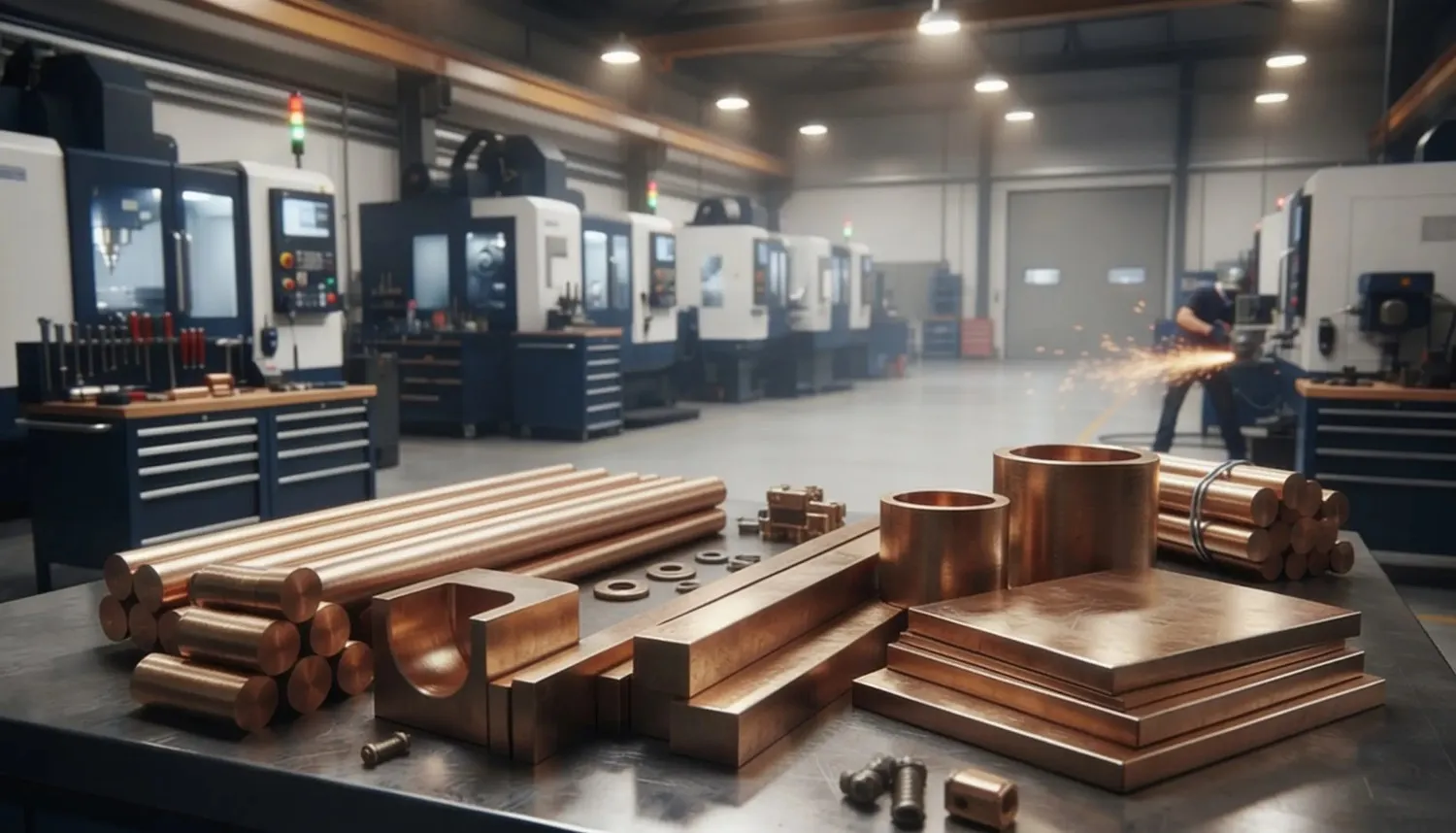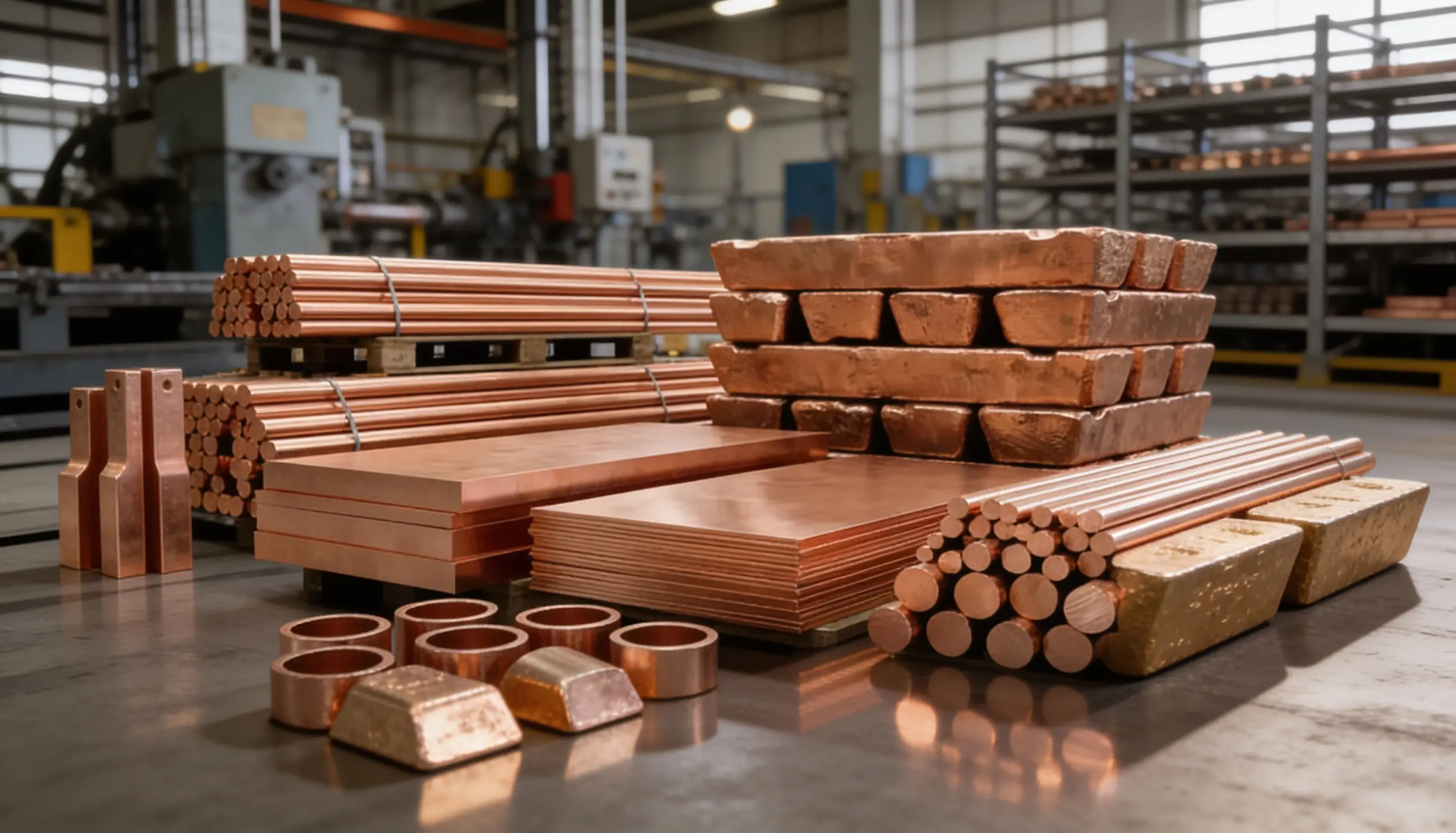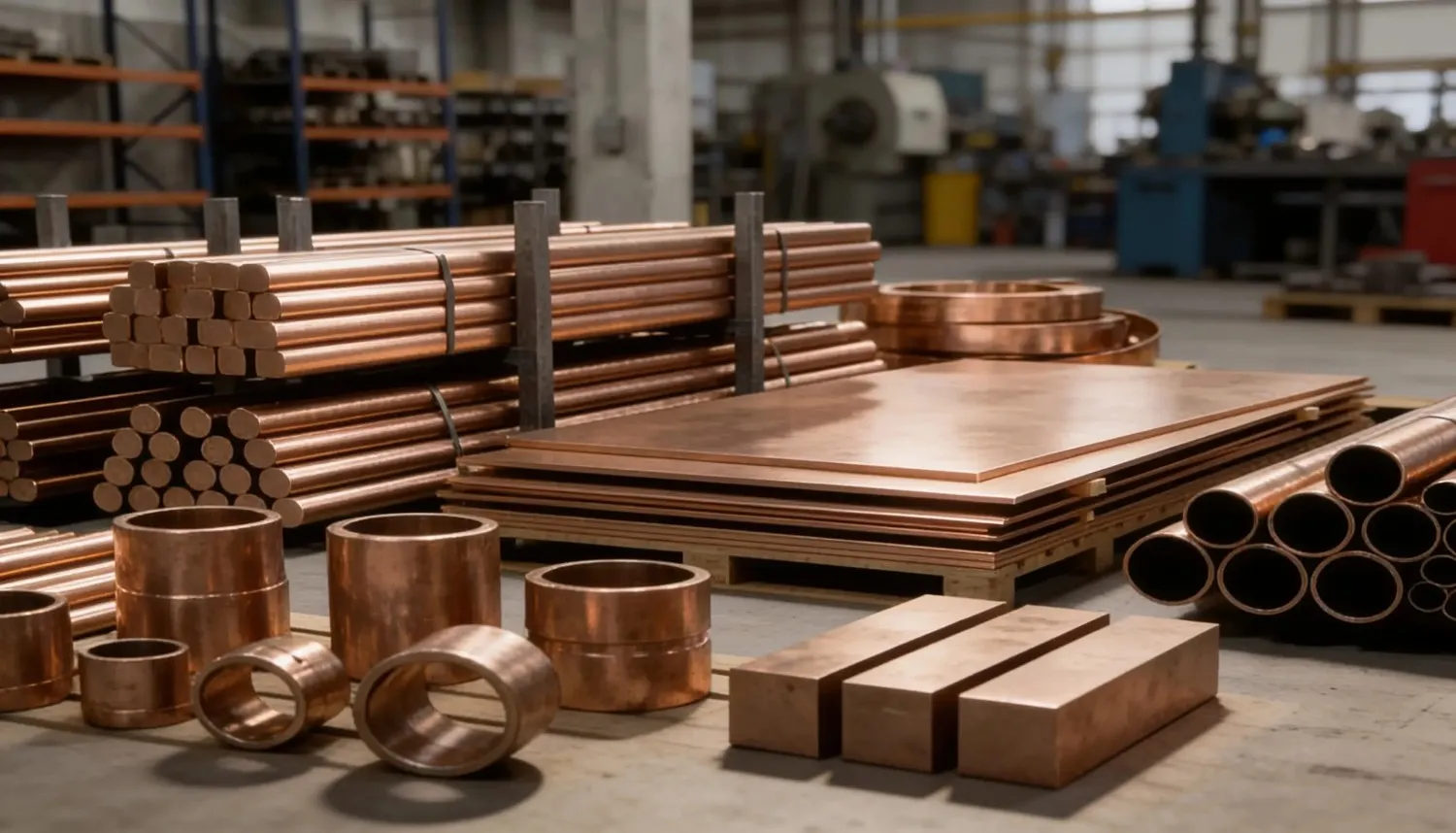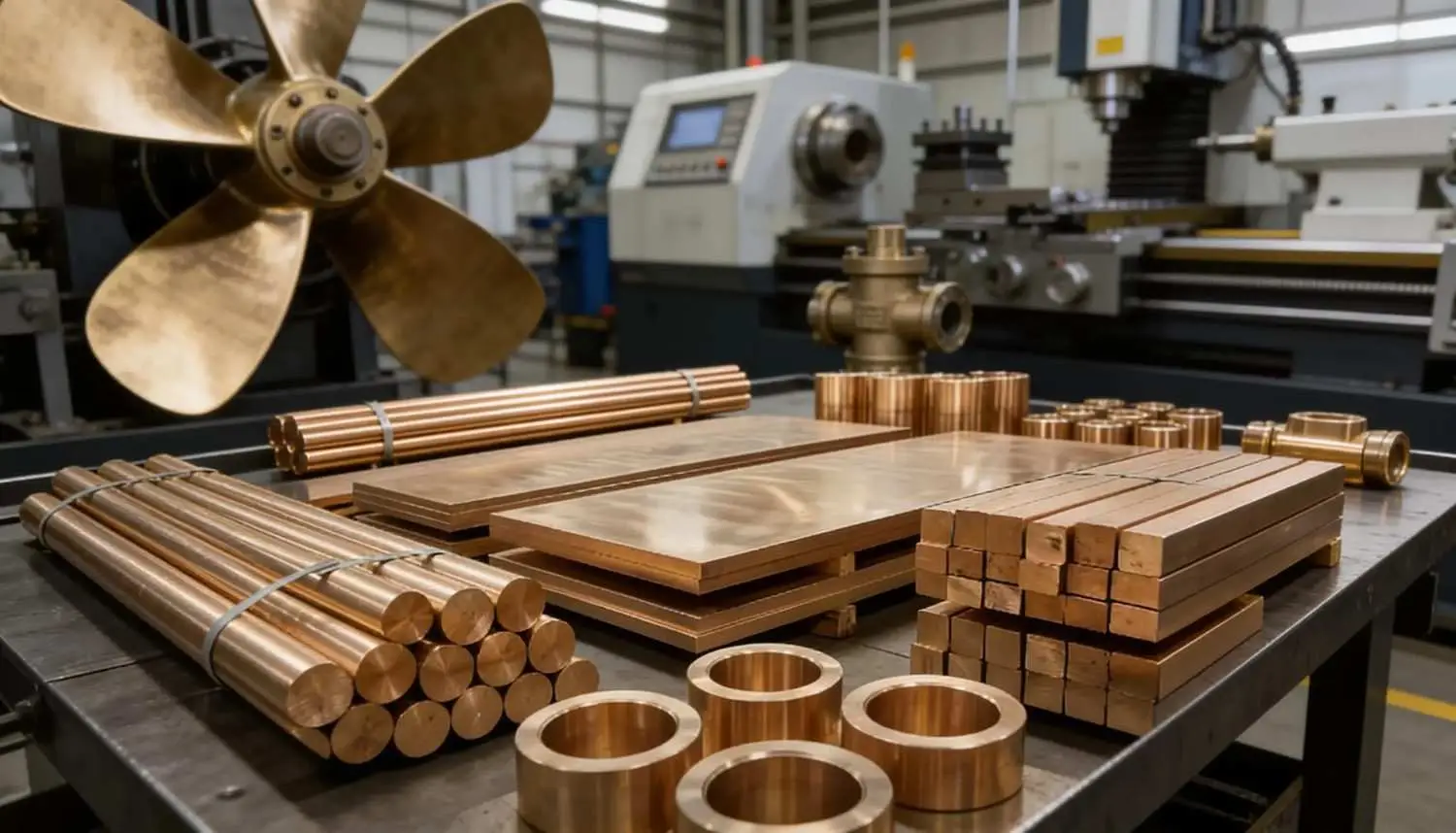
Aluminium bronze occupies a quiet but critical role in heavy industry. Walk through a marine fabrication facility or offshore drilling platform and you'll find it consistently outperforming alternative alloys in seawater corrosion resistance, wear tolerance and load-bearing strength. By adding aluminium to copper—typically 5 to 11% by weight—metallurgists created a material that doesn't just survive harsh environments. It thrives in them.
This guide delivers what procurement managers, engineers and fabricators actually need: what aluminum bronze is, how to select it, where to source it and why it matters for your project.
Aluminium bronze is a copper alloy engineered for severe corrosion and wear resistance. Unlike brass (copper with zinc) or tin bronze (copper with tin), aluminum bronze introduces aluminum as the primary alloying element, fundamentally transforming performance characteristics.
The alloy develops a thin, self-healing oxide layer when exposed to oxygen. This protective film resists atmospheric corrosion far more effectively than traditional bronzes. In seawater, this same mechanism prevents de-aluminification that compromises conventional copper alloys. The resulting shield is harder, more tenacious and self-regenerating when scratched.
The defining advantage? Exceptional strength without sacrificing corrosion resistance. Most high-strength alloys require trade-offs. Aluminium bronze refuses that compromise, delivering tensile strengths exceeding 400 MPa while maintaining superior performance in saltwater, chemical exposure and moderate-temperature oxidation.
Aluminium bronze comes in several formulations optimised for different applications:
| Grade | Copper (%) | Aluminium (%) | Nickel (%) | Iron (%) | Primary Use |
|---|---|---|---|---|---|
| C62500 (AL 5%) | Balance | 5–6 | — | — | Cold-working, atmospheric corrosion resistance |
| C63000 (AL 10%) | Balance | 9–11 | — | — | General-purpose strength and corrosion resistance |
| C95400 (AL 10% + Ni) | Balance | 9–11 | 4–6 | 3–5 | Marine propellers, pump parts |
| CuAl10Ni5Fe4 (NAB) | 81 | 10 | 5 | 4 | Naval and subsea applications |
The 5% aluminium grades are suitable for applications that prioritise formability. The 9–11% formulations represent the workhorse compositions—an optimal balance of strength, corrosion resistance and machinability.
Nickel Aluminium Bronze (NAB) deserves special mention. By adding controlled nickel and iron, manufacturers suppress de-aluminification risk and improve toughness. This specification appears on naval vessels and deep-water oil platforms; that is why people always need to check for the best Aluminium Bronze Plates Manufacturers In India to get the best and most accurate solution according to their demand.
In the production process, raw materials are selected in a very careful manner. The purity of the copper used in the alloy has a strong impact on its durability and therefore, the relevant companies take raw material examination as seriously as they are dealing with the production process.
Melting is the first operation within the production stage, which is properly done in special furnaces since the presence of oxidised aluminum has to be taken into account. Some specialists use special fluxes, including chlorine for deoxidising aluminium before it is introduced into the process of alloy making.
After that, the manufacturing process goes in different directions as components produced through casting (pump bodies, valve casings and bearing cages) are formed in permanent moulds, while extruded rods and plates are produced through hot extrusion in order to create proper directional grain structure.
Aluminium bronze has a density of approximately 7.7 g/cm³—lighter than steel and heavier than aluminium—giving it favourable strength-to-weight ratios. Thermal conductivity runs 50–65 W/m·K (depending on composition), making it less conductive than pure copper but useful for heat dissipation applications requiring corrosion resistance.
Mechanical properties vary by temper:
| Property | As-Cast | Annealed | Hard-Drawn | Unit |
|---|---|---|---|---|
| Tensile Strength | 310–380 | 320–400 | 450–550 | MPa |
| Yield Strength | 120–180 | 140–200 | 300–400 | MPa |
| Elongation | 15–25 | 18–30 | 2–8 | % |
| Hardness | 110–140 | 100–130 | 180–220 | HB |
Strength improves dramatically with work hardening, making matel ideal for applications requiring both fabrication flexibility and high in-service strength.
This is where aluminum bronze separates itself definitively. In seawater, performance differences are transformative, not subtle.
Seawater corrodes most copper alloys through multiple mechanisms: concentration cell corrosion creates electrochemical couples that accelerate attack. Dealuminification selectively removes aluminium, creating porous, weakened layers. Selective phase attack exploits compositional differences.
Aluminium bronze resists all three. The protective oxide film self-heals when scratched, rebuilding within hours. Even in stagnant seawater where oxygen diffusion is limited, the film maintains integrity far better than alternatives.
Nickel-aluminium bronze extends these benefits further. Nickel addition virtually eliminates the risk of de-aluminification. After decades in service, NAB propellers retain structural integrity while conventional bronzes show troubling corrosion patterns.
Field experience confirms test data: corrosion rates below 0.1 mm/year in flowing seawater, minimal attack in atmospheric exposure over 20+ years and broad compatibility with industrial chemicals.
Aluminium bronze has distinct qualities that make them a preferred choice in a wide number of industries. Let us have a look:
Propellers represent the most visible application. Aluminium bronze propellers operate reliably in saltwater for decades. Beyond propellers, the material appears throughout marine systems: pump impellers, valve bodies, heat exchanger tubes and fastening hardware. Offshore drilling platforms rely on aluminum bronze for subsea equipment where corrosion under insulation threatens alternative alloys.
Production facilities use aluminium bronze in downhole tools, pump shafts and valve seats. The material resists hydrogen sulphide corrosion better than many stainless steels while avoiding brittle fracture risks of lower-alloy steels. Subsea wellhead equipment incorporates aluminum bronze bearings and guide rings.
Steam condenser tubing made from aluminum bronze resists aggressive chloride environments in coastal plants. The alloy's thermal conductivity supports heat transfer efficiency while exceptional corrosion resistance extends condenser tube life compared to alternatives.
When it comes to equipment that will require 15–20 years of service without replacement, many manufacturing companies that deal with dilute acids, alkalis, and oxidising chemicals specify the use of aluminium bronze. This is due to its resistance to stress corrosion cracking, which allows it to be used in environments where stainless steel may fail unexpectedly.
Gears, bushings and bearing shells in industrial machinery leverage aluminum bronze's wear resistance and high strength. Coupling components and precision-machined parts in mining, cement and equipment manufacturing rely on dimensional stability and long-term wear performance.
The great resistance of the material to problems of corrosion saves the need for the protection systems and allows reducing costs because of the need to perform maintenance works due to corrosion. Another huge advantage of the use of the reinforced plastic materials is in the fact that their mechanical properties allow reducing the weight of the components as well. High chemical inertia of the material makes it possible to use it in a vast field of industries. It is also known for its excellent ability to resist any corrosion due to different types of wear and tear.
Begin with application requirements; do not get entangled in any form of budget. Communicate operating requirements with the choice of manufacturers surrounding what composition would work best for you. Make sure you ask for and verify the certification of materials supplied to you (ASTM, NORSOK, DGS, AMS). Build relationships with Aluminium Bronze Plates Suppliers In India who can offer you technical aid and quality assurance in the process and comply regarding the timeframes.
Did You Know?Aluminium bronze bushings can absorb impact loads that would crack cast iron alternatives, making them ideal for shock or vibration applications.
Ganga R Ispat Metals are reputable manufacturers and suppliers of premium-quality metal products for a variety of industries. Established in 2019 by Mr. Narayanlal Ramjiram Kalbi, the company is located in Ahmedabad, Gujarat and supplies throughout India as well as internationally. Having gained 7+ years of experience in the industry, the company prides itself on being specialists in bronze plates, aluminum bronze, copper products, phosphor bronze products and gunmetal components suitable for demanding industrial purposes. Ganga R Ispat Metals utilises sophisticated manufacturing processes, high standards of quality, the supply of large orders and customised solutions, providing strong, precise and reliable products for use in modern industries.
Aluminium bronze uses aluminum as the primary alloying element, which highly improves seawater corrosion resistance. Tin bronze performs well in freshwater or dry conditions but suffers accelerated corrosion in saltwater. For marine applications, aluminium bronze is definitively superior.
Yes, with care. Aluminium bronze can be welded using gas tungsten arc welding (GTAW) or shielded metal arc welding (SMAW) with appropriate filler rod. Preheating and post-weld heat treatment improve joint properties. Skilled operators and controlled procedures are essential.
Most aluminium bronze grades perform reliably to approximately 400–450°C continuous exposure. Above this temperature, oxidation rates increase and mechanical properties diminish. Sustained operation above 450°C requires special alloys.
Seawater chlorides attack austenitic stainless steel through pitting and stress corrosion cracking. Aluminium bronze's protective oxide film resists chloride attack. The absence of iron eliminates galvanic couple mechanisms. In long-term seawater service, properly specified aluminum bronze often outperforms stainless steel.
Generally excellent. Cutting tools experience a reasonable life, feed rates are practical and finish quality is good. Hard-drawn material machines differently than annealed stock—harder material requires sharper tools but produces better finishes.
Yes, under appropriate conditions. Hydrogen embrittlement susceptibility is lower than in hardened steels, making it suitable for many hydrogen applications. Consult specialists for critical applications to ensure suitability.
Ready to Update Your Inventory?You can Contact Ganga R Ispat Metals via the website gangametals.com for product selection guidance, custom options for different sizes, pricing of various grades and delivery times as per your requirements. The team will discuss the application with you and advise you about the right combinations of performance and cost along with deliveries. |
Connect with our experts to source high-quality brass rods, bronze rods, copper alloys, and precision metal components tailored to your industrial requirements.