Out of all the materials and metals that are being tested for sustainability, one ancient alloy continues to be in power—bronze. Often called the backbone of modern engineering, bronze is used in a plethora of applications. From naval vessels in the sea to the manufacturing of precision gears, the use of bronze products can be seen everywhere.
The following guide dives into the extensive world of bronze products, their properties, and why they are preferred by engineers in the whole wide world.
1. The Alchemy of Bronze: Composition and Grades
2. Core Bronze Product Categories
3. Bronze vs. The Competition: A Comparative Analysis
4. Why 2026 is the "Green Age" for Bronze
5. Industrial Applications: Where Bronze Lives
6. Maintenance: How to Preserve Your Bronze Assets
Let us now talk about them individually.
Bronze Products is made up of copper and tin—88% copper + 12% tin. By adding other metals, we get high-performance products that are used in a wide number of applications.
The "Recipes" of Excellence
Phosphor Bronze: It is incredible how by adding just a small amount of phosphorus (0.01% to 0.35%), the alloy starts showing features of that of a spring. It also becomes resistant to fatigue. Electrical connectors and springs are manufactured by the same process.
Let us take a break and read this fun fact.
Fun Fact 1: Have you ever heard of the “Bronze Age"? Yes, bronze brought such a revolution in the lives of the people that an entire age of human existence is named after it.
At Ganga R Ispat Metals, we do not consider bronze just an alloy but a useful material that can easily transform alloy into the required shape that is suitable for various industrial uses. Let us look at some of the most common types of bronze products and their uses.
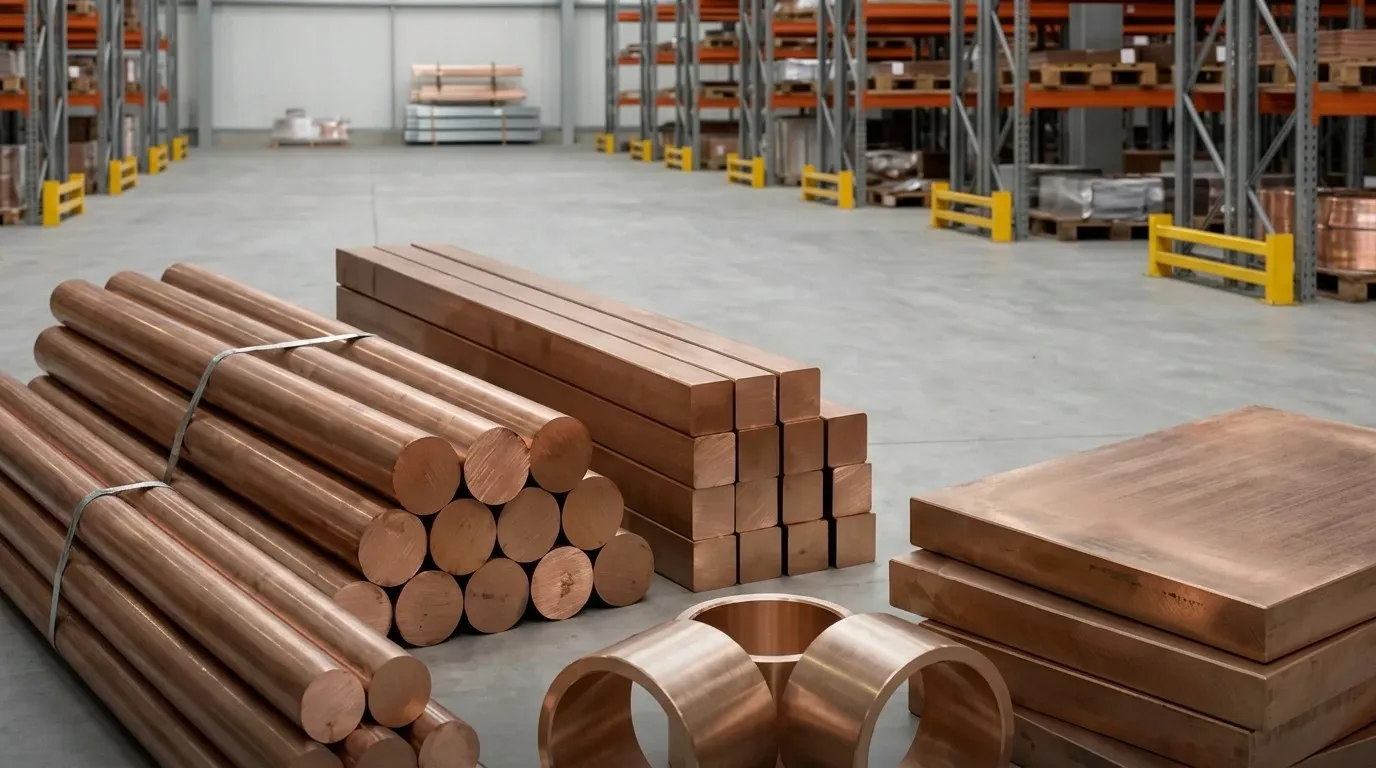
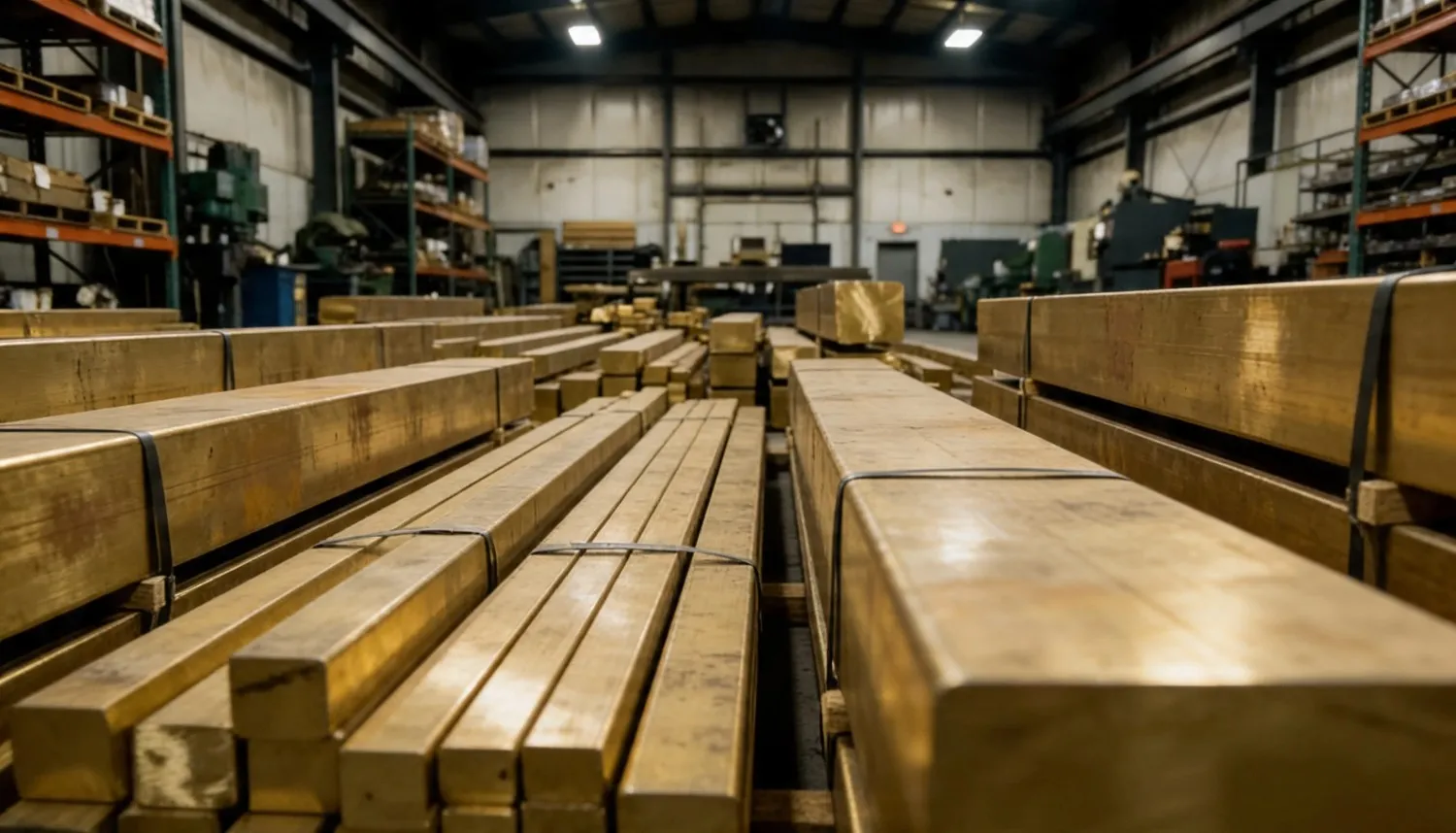
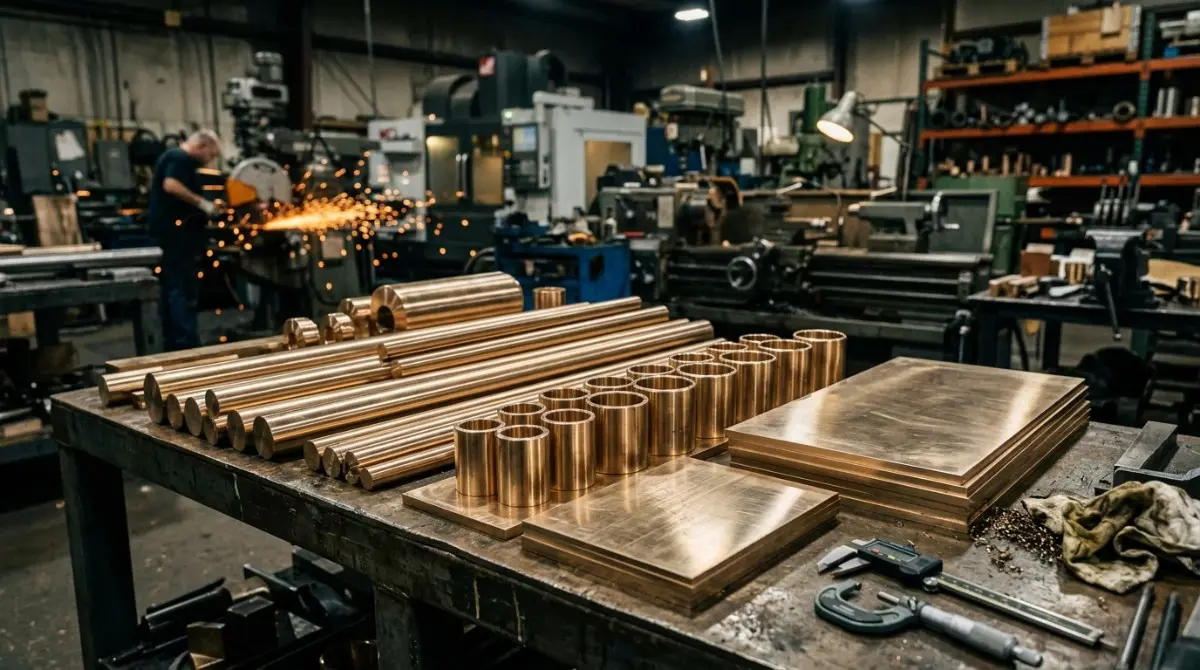
One of the most versatile forms of bronze is rods and bars. They undergo a thorough continuous extrusion. casting Rods and bars are the most versatile forms of bronze. Produced through continuous casting or extrusion, they are ideal for CNC machines.
Bronze has an anti-frictional property.
The Utility: Some heavy-duty industrial machines, like industrial pumps, use bronze bushes to protect the shafts from wearing out.
Pro-Tip: Often, oil can be put into ball bearings, making them self-lubricating.
Another important property of bronze is that it can tolerate high pressure.
Bronze is a bit more expensive than brass or steel. It is because of TCO (total cost of ownership).
| Feature | Bronze | Brass | Steel |
|---|---|---|---|
| Primary Alloy | Copper + Tin | Copper + Zinc | Iron + Carbon |
| Corrosion Resistance | Superior (Saltwater-proof) | Moderate | Poor (Requires coating) |
| Friction Levels | Extremely Low | Low | High (Prone to seizing) |
| Magnetic Properties | Non-Magnetic | Non-Magnetic | Highly Magnetic |
| Spark Resistance | Non-Sparking | Non-Sparking | Sparks when struck |
| Best Application | Heavy load, marine, gears | Decorative items, plumbing | Structural frames |
Fun Fact #3: The Non-Sparking Safety Net > In sensitive places like oil refineries, there is always a risk of explosion. Now, since bronze is non-sparking, it is used in explosion-risk areas.
In 2026, sustainability had become a necessity, more than just the talk of the town. It is one of the most sustainable industrial materials that is found on the planet earth. Here are some of the reasons.
Bronze components are found in:
Fun Fact #4: The Statue of Liberty’s Secret > The Statue of Liberty is made of copper—well, the outside is… but its internal structure is made of bronze, making it sturdy.
Even when bronze is durable, a little maintenance is always welcome.
Yes. While the upfront cost is higher, bronze lasts 3–5 times longer in high-friction environments. When you factor in the cost of machine downtime and replacement labor, bronze is actually the cheaper option over time.
Check the surface for "porosity" (tiny holes). High-quality bronze from manufacturers like Ganga R Ispat Metals should be smooth and dense. Also, check for "leaching"—low-quality alloys often have an uneven color because the metals weren't mixed properly during smelting.
No. Bronze does not contain iron, so it cannot "rust." It develops a green patina (copper carbonate), which acts as a protective shield. This is why 2,000-year-old bronze artifacts found in the ocean are still structurally sound!
Proximity to high-tech industrial parks and advanced testing laboratories makes the Delhi/NCR region a center for metallurgical excellence. Factories here use the latest spectrometers to ensure the chemical "recipe" of every ingot is perfect.
Store them in a dry, low-humidity environment. While oxidation doesn't harm the metal's strength, keeping them dry ensures they remain "shiny" and ready for immediate machining without pre-cleaning.
As we move further into this year, the requirement for efficiency and sustainability also grows. At Ganga R Ispat Metals, we leave no stone unturned in providing unbeatable solutions to businesses with our brass products, gunmetal products, copper products, and bronze products. It does not matter if you need bronze rods or bronze brushes for your industry; we have it all. Contact Us today for more details.
Before you go, here is another fun fact for you—
Bronze is said to perform well even in the most intense of temperatures. It is for this reason that NASA uses bronze alloys in their spacecraft.
Connect with our experts to source high-quality brass rods, bronze rods, copper alloys, and precision metal components tailored to your industrial requirements.