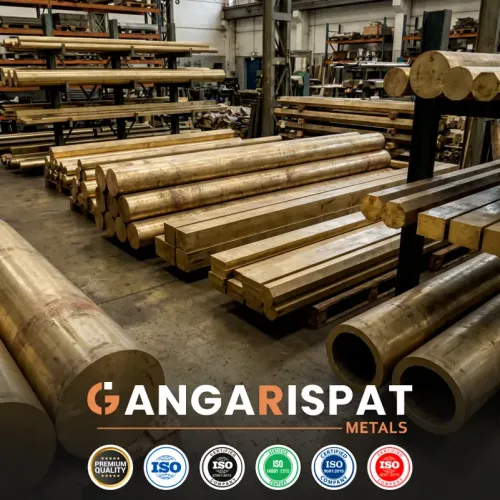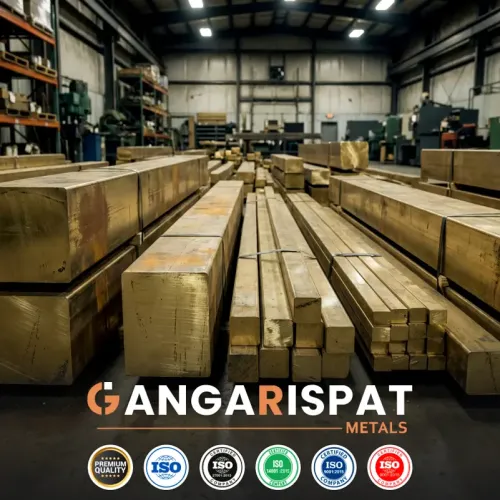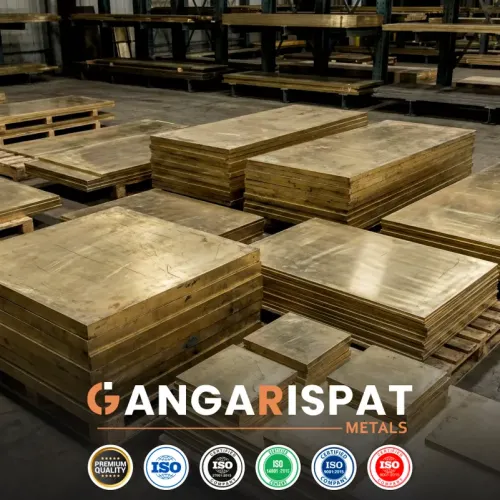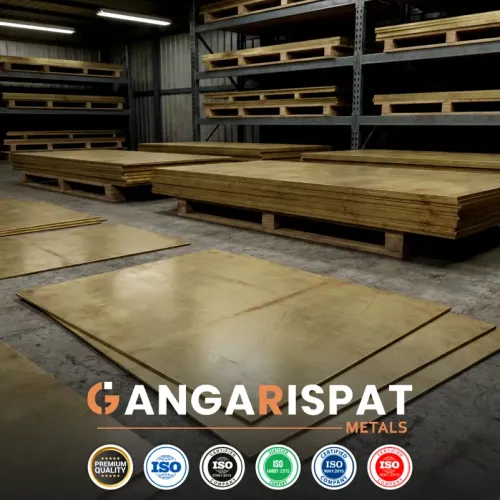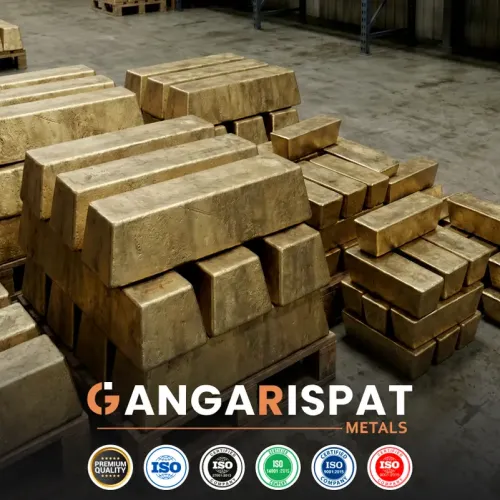


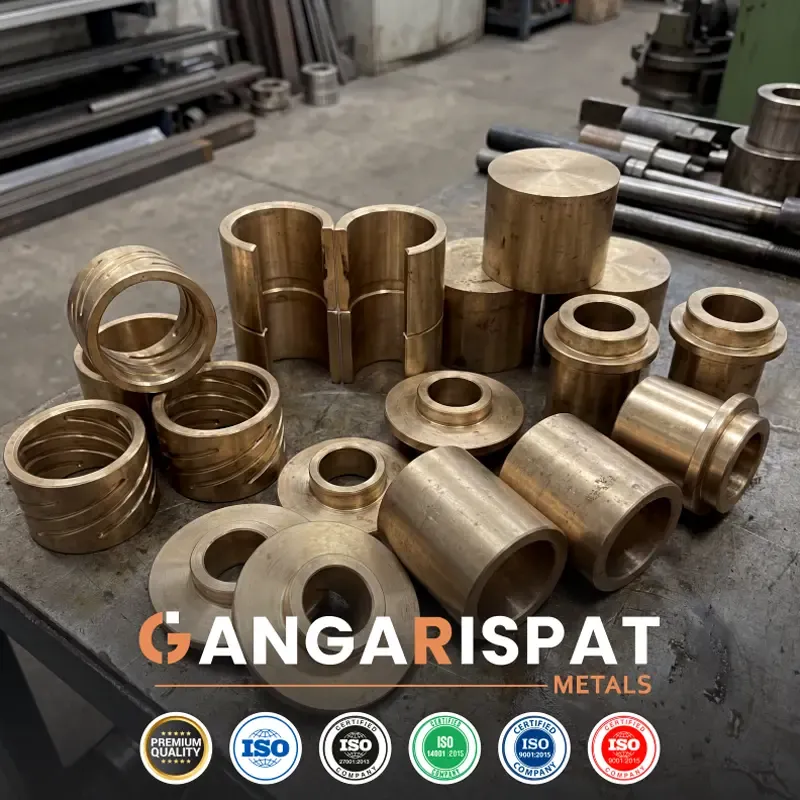

These highly efficient industrial components are well-known for their outstanding resistance against wear and tear, load bearing capacity, anti-corrosive properties, and smooth functioning. These highly machined components are extensively used in applications that require reduced friction, durability, and movement between the mechanical parts. Brass bushes are extremely important in automotive systems, industrial machines, pumps, valves, agricultural machines, electrical parts, construction machines, and heavy engineering applications.
Ganga R Ispat Metals is among the Top Brass Bushes Manufacturers in Visakhapatnam providing high-quality brass bushes made from the best brass alloy materials by employing modern machining techniques.
There are many brass bushes which come in varying sizes, shapes, types, and modifications to meet the requirements of various industries.. Brass is the ideal metal to be used in precision engineering owing to its good lubricating nature, anti-corrosive nature, and capacity to withstand continuous friction.
All the brass bushes supplied by Ganga R Ispat Metals undergo stringent quality checks in terms of accurate measurements, smooth surface finishing, and quality parameters of the local as well as international market.
Brass bushings are an extremely important factor in the functioning of machines. They are used in everyday life in the automobile and construction industry. Ganga R Ispat Metals is a reliable supplier of all types of Brass bushings, ranging from raw manufacturing to mass supply. They are known for their quality products and excellent service. This article will provide you with an understanding as to why brass bushings are so crucial, and why it is crucial that they are sourced locally.
Ganga R Ispat Metals, one of the most trusted Brass Bushings Manufacturers in Visakhapatnam produces bushings to cater for the evolving requirements of their clients. They produce their brass to meet the highest quality and testing standards and offer a high performing brass for auto and industrial use. Due to this superior manufacturing technique We were able to produce a full range of plain and flanged brass bushings. Brass bushings are put through quality control procedures during the full manufacturing process to guarantee that they have the correct design, fit and finish.
Brass bushes are used to reduce the friction between two moving parts in a cylindrical shape. They are used as a type of brass bush bearing to allow the shafts to rotate or slide in a space without coming into direct contact with metal.This helps to prevent damage to surrounding machinery due to wear and heat build-up. The main reason for the high value of these components is their durability, resistance to corrosion and ability to withstand the constant movements in harsh industrial settings.
Finding good Brass Bushes Suppliers in Visakhapatnam but not so in Ganga R Ispat Metals where they have a consistent stock and provide timely deliveries. The supply chain for small orders or bulk orders of 34*12 brass bushing or any special custom grade is viable. There is no lack of products to stop businesses because of close business linkages.
Various mechanical requirements require various designs. The right choice will depend on the direction of the load, the method of mounting, and the space available.
The performance of the components is largely dependent on the material. The right grade has an impact on loading capacity, wear and service life.
If you are in need of bulk orders, Ganga R Ispat Metals is one of the best Brass Bushes Wholesalers in Visakhapatnam that will provide you with the very best brass bushes at affordable prices. The steady demand for brass components from local hubs means that it has become imperative for local manufacturers to have a reliable wholesale network. Flexible order quantities, consistent stock availability, and fast turnaround for big orders, long production runs are some of the advantages offered to distributors.
Ganga R Ispat Metals employ a casting/centrifugal casting process, followed by precision machining. Higher density and uniformity are achieved in centrifugal casting, which is suitable for high load applications, compared to casting shapes from raw brass into rough form. Machining then provides dimensions to exact tolerances, making it smooth fit in any instance of a standard sleeve or flanged brass bushing. This process can have a direct impact on durability and longevity.
With a combination of precision manufacturing and reliable supply, Ganga R Ispat Metals is a trusted supplier for brass bushes, suitable for use in various industries. Each component is quality tested thoroughly before shipment, to support consistent performance when the product is used in real working conditions. Flexible solutions are tailored to your needs, from custom sizes to bulk orders. Brass bushes are easily sourced, reliable and stress-free thanks to timely delivery and clear communication.
From manufacturing to export, Ganga R Ispat Metals covers every stage of the brass bush supply chain in Visakhapatnam. Whether you need standard components or custom sizes, reliable sourcing starts here.
Get in touch with Ganga R Ispat Metals today to discuss your brass bushes requirement.
| Mechanical Property | Metric Units | English Units |
|---|---|---|
| Tensile Strength | 300 – 550 MPa | 44 – 80 ksi |
| Yield Strength (0.2% Proof) | 120 – 350 MPa | 17 – 51 ksi |
| Elongation | 10 – 45 % | 10 – 45 % |
| Hardness (Brinell, HB) | 80 – 150 HB | 80 – 150 HB |
| Modulus of Elasticity | 100 – 110 GPa | 14.5 – 16.0 Msi |
| Shear Strength | 200 – 350 MPa | 29 – 51 ksi |
| Fatigue Strength | 120 – 200 MPa | 17 – 29 ksi |
| Impact Resistance | Moderate | Moderate |
| Wear Resistance | Good | Good |
| Creep Resistance (≤ 200 °C) | Good | Good |
| Property | Typical Value |
|---|---|
| Tensile Strength | 350 – 500 MPa |
| Yield Strength | 200 – 350 MPa |
| Elongation | 10 – 25 % |
| Hardness | 100 – 150 HB |
| Machinability Rating | ≈ 100 % |
| Wear Resistance | Very Good |
| Property | Typical Value |
|---|---|
| Tensile Strength | 300 – 450 MPa |
| Yield Strength | 120 – 300 MPa |
| Elongation | 20 – 45 % |
| Hardness | 80 – 120 HB |
| Cold Workability | Excellent |
| Impact Resistance | Good |
| Property | Typical Value |
|---|---|
| Tensile Strength | 320 – 480 MPa |
| Yield Strength | 150 – 320 MPa |
| Elongation | 15 – 35 % |
| Hardness | 85 – 130 HB |
| Wear Resistance | Good |
| Property | Typical Value |
|---|---|
| Tensile Strength | 380 – 520 MPa |
| Yield Strength | 200 – 350 MPa |
| Elongation | 15 – 30 % |
| Hardness | 100 – 140 HB |
| Corrosion Resistance | Excellent |
| Stress Cracking Resistance | Excellent |
| Property | Typical Value |
|---|---|
| Tensile Strength | 350 – 500 MPa |
| Yield Strength | 180 – 320 MPa |
| Elongation | 12 – 30 % |
| Hardness | 95 – 140 HB |
| Surface Finish Quality | Excellent |
| Physical Property | Typical Value | Units |
|---|---|---|
| Density | 8.3 – 8.7 | g/cm³ |
| Density | 520 – 545 | lb/ft³ |
| Melting Point | 900 – 940 | °C |
| Melting Point | 1650 – 1725 | °F |
| Thermal Conductivity | 100 – 130 | W/m·K |
| Electrical Conductivity | 20 – 30 | % IACS |
| Coefficient of Thermal Expansion (20–300 °C) | 18 – 21 ×10⁻⁶ | /°C |
| Specific Heat Capacity | 0.37 – 0.39 | kJ/kg·K |
| Magnetic Permeability | ~1.0 | Non-magnetic |
| Electrical Resistivity | 6 – 7 | µΩ·cm |
| Sound Damping Capacity | Moderate | — |
| Friction Coefficient (Dry, against steel) | 0.35 – 0.45 | — |
| Property | Typical Value | Units |
|---|---|---|
| Thermal Conductivity | 115 | W/m·K |
| Specific Heat Capacity | 0.38 | kJ/kg·K |
| Coefficient of Thermal Expansion (20–300°C) | 19 | ×10⁻⁶ /°C |
| Melting Point | 910 | °C |
| Maximum Operating Temperature | 200 | °C |
| Property | Typical Value | Units |
|---|---|---|
| Thermal Conductivity | 110 | W/m·K |
| Specific Heat Capacity | 0.38 | kJ/kg·K |
| Coefficient of Thermal Expansion (20–300°C) | 19 | ×10⁻⁶ /°C |
| Melting Point | 920 | °C |
| Maximum Operating Temperature | 200 | °C |
| Property | Typical Value | Units |
|---|---|---|
| Thermal Conductivity | 120 | W/m·K |
| Specific Heat Capacity | 0.38 | kJ/kg·K |
| Coefficient of Thermal Expansion (20–300°C) | 20 | ×10⁻⁶ /°C |
| Melting Point | 915 | °C |
| Maximum Operating Temperature | 200 | °C |
| Property | Typical Value | Units |
|---|---|---|
| Thermal Conductivity | 105 | W/m·K |
| Specific Heat Capacity | 0.37 | kJ/kg·K |
| Coefficient of Thermal Expansion (20–300°C) | 18 | ×10⁻⁶ /°C |
| Melting Point | 910 | °C |
| Maximum Operating Temperature | 200 | °C |
| Property | Typical Value | Units |
|---|---|---|
| Thermal Conductivity | 100 | W/m·K |
| Specific Heat Capacity | 0.37 | kJ/kg·K |
| Coefficient of Thermal Expansion (20–300°C) | 18 | ×10⁻⁶ /°C |
| Melting Point | 925 | °C |
| Maximum Operating Temperature | 200 | °C |
| Property | Typical Value | Units |
|---|---|---|
| Thermal Conductivity | 108 – 110 | W/m·K |
| Specific Heat Capacity | 0.37 – 0.38 | kJ/kg·K |
| Coefficient of Thermal Expansion (20–300°C) | 19 | ×10⁻⁶ /°C |
| Melting Point | 920 | °C |
| Maximum Operating Temperature | 200 | °C |
| Standard System | Grade / Designation | Equivalent / Common Trade Name |
|---|---|---|
| ASTM / UNS (USA) | C21000 | Commercial Brass |
| ASTM / UNS (USA) | C22600 | Yellow Brass |
| ASTM / UNS (USA) | C23000 | Admiralty Brass |
| ASTM / UNS (USA) | C24000 | Commercial Brass |
| ASTM / UNS (USA) | C26000 | Cartridge Brass |
| ASTM / UNS (USA) | C26800 | Yellow Brass |
| ASTM / UNS (USA) | C27200 | Yellow Brass |
| ASTM / UNS (USA) | C28000 | Architectural Brass |
| British Standard (BS) | CZ 101 | Cartridge Brass |
| British Standard (BS) | CZ 102 | Yellow Brass |
| British Standard (BS) | CZ 103 | Free-Cutting Brass |
| British Standard (BS) | CZ 106 | Naval Brass |
| British Standard (BS) | CZ 107 | Architectural Bronze |
| British Standard (BS) | CZ 108 | Clock Brass |
| British Standard (BS) | CZ 109 | Clock / Leaded Brass |
| Euro Standard (EN / CW) | CW500L | Cartridge Brass |
| Euro Standard (EN / CW) | CW501L | Cartridge Brass |
| Euro Standard (EN / CW) | CW502L | Yellow Brass |
| Euro Standard (EN / CW) | CW503L | Free-Cutting Brass |
| Euro Standard (EN / CW) | CW504L | Naval Brass |
| Euro Standard (EN / CW) | CW505L | Architectural Brass |
| Euro Standard (EN / CW) | CW506L | High Strength Brass |
| Euro Standard (EN / CW) | CW507L | Leaded Brass |
| Euro Standard (EN / CW) | CW508L | Special Brass |
| Euro Standard (EN / CW) | CW509L | High Performance Brass |
| Indian Standard (IS) | IS: 319 / 89 | Cartridge Brass (C260 Equivalent) |
| Indian Standard (IS) | IS: 320 / 80 | Yellow Brass (C272 Equivalent) |
| ISO / EN | EN 12163 – CW501L | Cartridge Brass |
| ISO / EN | EN 12164 – CW502L | Yellow Brass |
| ISO / EN | EN 12165 – CW503L | Free-Cutting Brass |
| ISO / EN | EN 12167 – CW504L | Naval Brass |
| ISO / EN | EN 12168 – CW505L | Architectural Bronze |
| S.No | Inner Diameter (ID) mm | Outer Diameter (OD) mm | Wall Thickness (mm) | Standard Length (mm) |
|---|---|---|---|---|
| 1 | 10 | 16 | 3 | 20 / 25 / 30 |
| 2 | 12 | 18 | 3 | 20 / 25 / 30 |
| 3 | 15 | 22 | 3.5 | 25 / 30 / 35 |
| 4 | 20 | 28 | 4 | 30 / 35 / 40 |
| 5 | 25 | 35 | 5 | 30 / 40 / 50 |
| 6 | 30 | 42 | 6 | 40 / 50 / 60 |
| 7 | 35 | 48 | 6.5 | 40 / 50 / 60 |
| 8 | 40 | 55 | 7.5 | 50 / 60 / 70 |
| 9 | 45 | 60 | 7.5 | 50 / 60 / 70 |
| 10 | 50 | 70 | 10 | 60 / 70 / 80 |
| 11 | 60 | 80 | 10 | 60 / 80 / 100 |
| 12 | 70 | 95 | 12.5 | 80 / 100 / 120 |
| 13 | 80 | 110 | 15 | 100 / 120 / 150 |
| 14 | 90 | 125 | 17.5 | 120 / 150 |
| 15 | 100 | 140 | 20 | 150 / 200 |
| 16 | 120 | 170 | 25 | 150 / 200 |
| 17 | 150 | 210 | 30 | 200 / 250 |
| 18 | 180 | 250 | 35 | 200 / 300 |
| 19 | 200 | 280 | 40 | 250 / 300 |
| 20 | 250 | 350 | 50 | 300 / 400 |
| Outer Ø (mm) | Inner Ø (mm) | Length (mm) | Wall (mm) | Approx Weight (g) |
|---|---|---|---|---|
| 12 | 8 | 10 | 2 | 3.2 |
| 12 | 8 | 20 | 2 | 6.4 |
| 14 | 10 | 10 | 2 | 3.8 |
| 14 | 10 | 20 | 2 | 7.6 |
| 16 | 12 | 10 | 2 | 4.4 |
| 16 | 12 | 20 | 2 | 8.8 |
| 18 | 14 | 10 | 2 | 5.0 |
| 18 | 14 | 20 | 2 | 10.0 |
| 20 | 16 | 10 | 2 | 5.7 |
| 20 | 16 | 20 | 2 | 11.4 |
| 22 | 18 | 10 | 2 | 6.3 |
| 22 | 18 | 20 | 2 | 12.6 |
| 25 | 20 | 10 | 2.5 | 7.7 |
| 25 | 20 | 20 | 2.5 | 15.4 |
| 28 | 22 | 15 | 3 | 14.3 |
| 28 | 22 | 30 | 3 | 28.6 |
| 30 | 24 | 15 | 3 | 16.2 |
| 30 | 24 | 30 | 3 | 32.4 |
| 32 | 25 | 20 | 3.5 | 23.4 |
| 32 | 25 | 40 | 3.5 | 46.8 |
| 35 | 28 | 20 | 3.5 | 26.9 |
| 35 | 28 | 40 | 3.5 | 53.8 |
| 40 | 32 | 20 | 4 | 34.0 |
| 40 | 32 | 40 | 4 | 68.0 |
| 45 | 36 | 25 | 4.5 | 54.6 |
| 45 | 36 | 50 | 4.5 | 109.2 |
| 50 | 40 | 25 | 5 | 66.7 |
| 50 | 40 | 50 | 5 | 133.4 |
| 60 | 50 | 30 | 5 | 120.2 |
| 60 | 50 | 60 | 5 | 240.4 |
| 70 | 60 | 40 | 5 | 186.6 |
| 70 | 60 | 80 | 5 | 373.2 |
| 80 | 70 | 40 | 5 | 213.4 |
| 80 | 70 | 80 | 5 | 426.8 |
| 100 | 85 | 50 | 7.5 | 443.0 |
| 100 | 85 | 100 | 7.5 | 886.0 |
| Grade / Designation | Equivalent / Common Trade Name | Cu % | Zn % | Pb % | Sn % | Others % |
|---|---|---|---|---|---|---|
| C21000 | Cartridge Brass | Balance | 30 – 35 | ≤ 0.05 | – | Fe ≤ 0.10 |
| C22600 | Yellow Brass | Balance | 70 – 75 | ≤ 0.05 | – | Fe ≤ 0.10 |
| C23000 | Admiralty / Naval Brass | Balance | 0 – 1 | ≤ 0.05 | 1 – 2 | Fe ≤ 0.10 |
| C24000 | Commercial Brass | Balance | 39 – 42 | ≤ 0.05 | – | Fe ≤ 0.10 |
| C26000 | Cartridge Brass | Balance | ~30 | ≤ 0.05 | – | Fe ≤ 0.10 |
| C26800 | Naval Brass | Balance | 39 – 42 | ≤ 0.05 | – | Fe ≤ 0.10 |
| C27200 | Yellow Brass | Balance | 30 – 35 | ≤ 0.05 | – | Fe ≤ 0.10 |
| C28000 | Architectural / Special Brass | Balance | 38 – 42 | ≤ 0.05 | – | Fe ≤ 0.10 |
| Grade / Designation | Equivalent / Common Trade Name | Cu % | Zn % | Pb % | Sn % |
|---|---|---|---|---|---|
| CZ 101 | Cartridge Brass | 70 – 75 | 25 – 30 | ≤ 0.05 | – |
| CZ 102 | Yellow Brass | 65 – 70 | 30 – 35 | ≤ 0.05 | – |
| CZ 103 | Free-Cutting Brass | 61 – 65 | 34 – 38 | 0.5 – 2.0 | – |
| CZ 106 | Naval Brass | 60 – 65 | 35 – 40 | ≤ 0.05 | – |
| CZ 107 | Architectural Bronze | 58 – 63 | 37 – 42 | ≤ 0.05 | – |
| CZ 108 | Clock Brass | 63 – 68 | 32 – 37 | 0.5 – 1.5 | – |
| CZ 109 | Clock / Leaded Brass | 60 – 65 | 32 – 37 | 2 – 4 | – |
| Grade / Designation | Equivalent / Common Trade Name | Cu % | Zn % | Pb % | Sn % |
|---|---|---|---|---|---|
| CW500L | Cartridge Brass | Balance | 30 – 35 | ≤ 0.05 | – |
| CW501L | Cartridge Brass | Balance | 30 – 35 | ≤ 0.05 | – |
| CW502L | Yellow Brass | Balance | 30 – 35 | ≤ 0.05 | – |
| CW503L | Free-Cutting Brass | Balance | 32 – 36 | 0.5 – 1.0 | – |
| CW504L | Naval Brass | Balance | 37 – 42 | ≤ 0.05 | – |
| CW505L | Architectural Bronze | Balance | 35 – 40 | ≤ 0.05 | – |
| CW506L / CW507L | Clock Brass | Balance | 32 – 37 | 0.5 – 2.0 | – |
| CW508L / CW509L | Special / Leaded Brass | Balance | 30 – 38 | 1.5 – 4.0 | – |
| Grade / Designation | Equivalent / Common Trade Name | Cu % | Zn % | Pb % | Sn % |
|---|---|---|---|---|---|
| IS: 319 / C260 | Cartridge Brass | 70 – 77 | 23 – 30 | ≤ 0.05 | – |
| IS: 320 / C272 | Yellow Brass | 63 – 70 | 30 – 37 | ≤ 0.05 | – |
| Process Step | Description | Equipment / Tools Used | Key Parameters / Specs | Quality Check |
|---|---|---|---|---|
| Material Selection | Choose high-quality brass alloy (usually Cu-Zn alloys like C360 or C464) | Material testing instruments | Chemical composition as per standards (ASTM/BIS) | Spectrometer analysis for alloy composition |
| Cutting / Blanking | Brass rods or bars cut into required lengths | Lathe, saw, CNC cutting machine | Length tolerance ±0.1 mm | Visual inspection & measurement |
| Turning / Machining | Machining the bushes to outer diameter, inner diameter, and thickness | CNC Lathe, automatic turning machine | OD & ID tolerance as per drawing (e.g., ±0.02 mm) | Micrometer, bore gauge |
| Drilling / Boring | Creating precise inner holes for bush application | Drilling machine, boring machine | Hole diameter tolerance ±0.01 mm | Bore gauge, plug gauge |
| Reaming / Finishing | Smooth internal surface for low friction and precision | Reamer, polishing tools | Surface roughness Ra ≤ 0.8 μm | Surface roughness tester |
| Deburring / Chamfering | Remove sharp edges and burrs for safe handling | Deburring machine, hand tools | Chamfer angle & edge smoothness | Visual inspection & measuring tools |
| Heat Treatment (Optional) | Improve mechanical properties like hardness and wear resistance | Annealing furnace, quenching setup | Temperature & time as per material grade | Hardness testing (Brinell / Rockwell) |
| Surface Treatment / Plating | For corrosion resistance and improved lubrication | Electroplating, polishing setup | Coating thickness 5–20 µm (if applicable) | Coating thickness gauge, visual inspection |
| Final Inspection | Check all dimensions, surface finish, and tolerance | Micrometers, calipers, gauges | All dimensions within specified tolerance | 100% dimensional inspection |
| Packaging & Dispatch | Pack finished brass bushes safely for shipment | Packaging materials, labeling tools | Proper labeling, anti-corrosion packing | Visual check, packing list verification |
| Finish Technique | Purpose / Benefit | Method / Equipment Used | Key Parameters / Specs | Quality Check |
|---|---|---|---|---|
| Polishing / Buffing | Smooth surface, improve appearance, reduce friction | Mechanical buffing wheels, polishing compounds | Surface roughness Ra ≤ 0.8 µm | Visual inspection, surface roughness measurement |
| Deburring / Chamfering | Remove sharp edges, prevent injuries and wear | Hand tools, deburring machine | Burr-free edges, chamfer angle 0.2–0.5 mm | Visual inspection, measuring tools |
| Electroplating / Coating | Corrosion resistance, wear resistance, aesthetic improvement | Electroplating setup (Ni, Zn, Sn) | Coating thickness 5–20 µm | Coating thickness gauge, adhesion test |
| Passivation / Pickling | Remove oxide layer, prevent tarnish | Acid bath or chemical treatment | Time & concentration as per alloy type | Visual inspection, surface uniformity |
| Lapping / Honing | Ultra-precise internal bore finish | Lapping stones, honing machines | Tolerance within ±0.01 mm, Ra ≤ 0.4 µm | Bore gauge, surface roughness tester |
| Grinding | Achieve final precise diameter and surface | Cylindrical / surface grinder | Tolerance as per drawing, smooth finish | Micrometer, visual & dimensional check |
| Tumbling / Vibratory Finishing | Smooth edges, deburr, prepare for plating | Vibratory finishing machine | Time: 30–120 min depending on batch size | Visual inspection, feel check |
| Oil / Lubricant Coating | Prevent corrosion during storage / shipping | Dipping or spraying | Thin uniform layer | Visual inspection, wipe test |
| Industry | Application of Brass Bushes | Reason / Benefit |
|---|---|---|
| Automotive | Gear assemblies, steering systems, suspension components, brake systems | Wear resistance, smooth movement, vibration reduction |
| Electrical & Electronics | Connectors, switches, motor components, relay parts | Excellent conductivity, corrosion resistance |
| Aerospace | Aircraft control linkages, landing gear components | High strength, precision, reliable under stress |
| Marine / Shipbuilding | Propeller shafts, rudder bearings, pumps, valves | Corrosion resistance in saltwater, long service life |
| Industrial Machinery | Conveyor rollers, shafts, cams, pumps, gearboxes | Low friction, high load-bearing capacity |
| Hydraulic / Pneumatic | Cylinders, pistons, valve bushings | Smooth motion, wear resistance |
| Textile Machinery | Looms, spindles, rollers | Reduced friction, precise operation |
| Food & Beverage Industry | Mixing equipment, pumps, packaging machinery | Non-sparking, corrosion resistance |
| Rail / Transportation | Bearings, couplings, suspension pivots | Wear resistance, vibration damping |
| Energy / Power Plants | Turbine bearings, valves, pump bushings | High load, reliable under high temperature and pressure |
Packaging is a major part of every delivery, and we understand it very well. We supply many types of metals and other industrial metal products to make sure they reach our customers safely. We know products face many types of problems, such as vibration, moisture and rough handling therefore we follow a careful and organised packaging process. Our goal is simple: we deliver every product in the same strong and perfect condition as when it leaves our facility.
We check every order before packing it. The size, straightness, surface quality, grade, and quantity of each rod and bar are checked. We ensure that the material is correct as per the customer request. Once inspected, we sort the products by their size and grade of material. This will ensure that we maintain the order in everything and prevent errors in dispatch. Bundling and loading are also simpler and quicker.
After these steps, make sure to arrange the products in proper alignment so that they are straight and balanced. Then they are strapped down with industrial grade strapping. These straps keep the bundle secure during lifting and transportation. We include additional support to shorten bending or movement in longer rods. We also ensure that the straps do not tear the edges or the surface of the material. This cautious wrapping ensures the merchandise is secure throughout the delivery and transportation.
Sometimes metal can be damaged by moisture and changing weather conditions. We apply protective methods based on the shipment type and destination. We may use anti-rust coatings, moisture-resistant wrapping, or protective covers to prevent them. Our additional cover against humidity and corrosion is given to export shipments and coastal deliveries. These will assist us to retain the shine, surface finish and integrity of our metal products in the long-distance transportation.
In case of large orders and/or shipments to the export market, we offer extra protection. We pack them on heavy pallets or stuff them into tough wooden structures that can be transported all over the world. The packaging is dependent on the size and weight of the shipment. We ensure that the packing is able to withstand packing pressure and movement of containers. This strong outer coating secures the materials throughout their long trips, port services and storage in warehousing.
We have proper lifting equipment such as forklifts and cranes to load materials. Our team places the bundles carefully inside trucks or containers. We place them in such a manner that they do not roll or shift during the transportation. We balance the weight to minimise the weight on any section of the shipment. Our safe loading methods give us the chance to reduce the chances of being damaged in transit, whether it is along the road or the sea.
Ganga R Ispat Metals distributes its products in India and also in overseas markets. We provide transportation with trusted logistics vendors. In the case of domestic deliveries, we organise road transportation. In export orders, we meet the international shipping standards and container loading requirements. Each shipment will be planned based on the delivery schedules to make it arrive on time. Our well organized transport system assists us in delivering products in an efficient and safe way.
We make ready all papers preceding dispatch. These documents can be invoices, packing lists, and required certificates. Proper documentation assists in easy transportation and reduced time in clearance of customs when making export shipments. We have good records to promote transparency and professional service.
A well-structured packaging and transportation process directly impacts product performance upon delivery. Our approach ensures:
We believe that packaging is not just about wrapping materials — it is about protecting the value and reliability of the product until it reaches the client.
In Ganga R Ispat Metals, we suppose that safe packaging and transportation ensure the value of our products. To avoid bending, scratches, and corrosion, we make every effort to avoid transit damage. We consider packaging as our quality responsibility. We have a standard process; however, our packing techniques are changed according to the product size, order quantity, and destination.
We ensure that all the rods and bars are sold to our customers in a powerful, secure and working condition. We offer secure packaging or assured transportation as an additional service.

Thin paint can be removed by brass wire brushes. Due to the softness of brass compared to steel, brass brushes have a less intense cleaning effect and have less tendency to damage or scratch the substrate.
Yes. Our products are export quality, corrosion-resistant and loaded to ship internationally. We are also frequent exporters to the international market and we meet the requirements of export packaging and documentation.
Brass bushes are simple bearings to decrease friction and wear between moving components, normally between a rotating shaft and a non-rotating housing. The materials find extensive application in automotive, industrial machinery, pumps, motors, construction equipment and agricultural machinery.
The life of a bushing is dependent on the load, speed of operation, material composition, lubrication, alignment of the shaft and working conditions. When brass bushings are chosen properly and lubricated properly, they can be depended upon to serve for several years in industrial use effectively.
Brass bushes are a beneficial combination of cost, machinability, corrosion resistance and mechanical performance. Brass is less expensive than bronze when it comes to medium load conditions. Brass is stronger, resistant to temperatures and stable in dimensions compared to plastic bushes.
The service life is dependent on the load, the speed, alignment, lubrication and the environment. When used in normal operating conditions, brass bushes have a long and reliable lifespan.

















Need Reliable Brass Bushes in Visakhapatnam?
+91-8006061818Let’s Talk About Your Next Industrial Metal Project in Visakhapatnam!
You can call anytime
+91-8006061818Connect with our experts to source high-quality brass rods, bronze rods, copper alloys, and precision metal components supplied for engineering, manufacturing, and industrial applications across Visakhapatnam.